

Cart
0
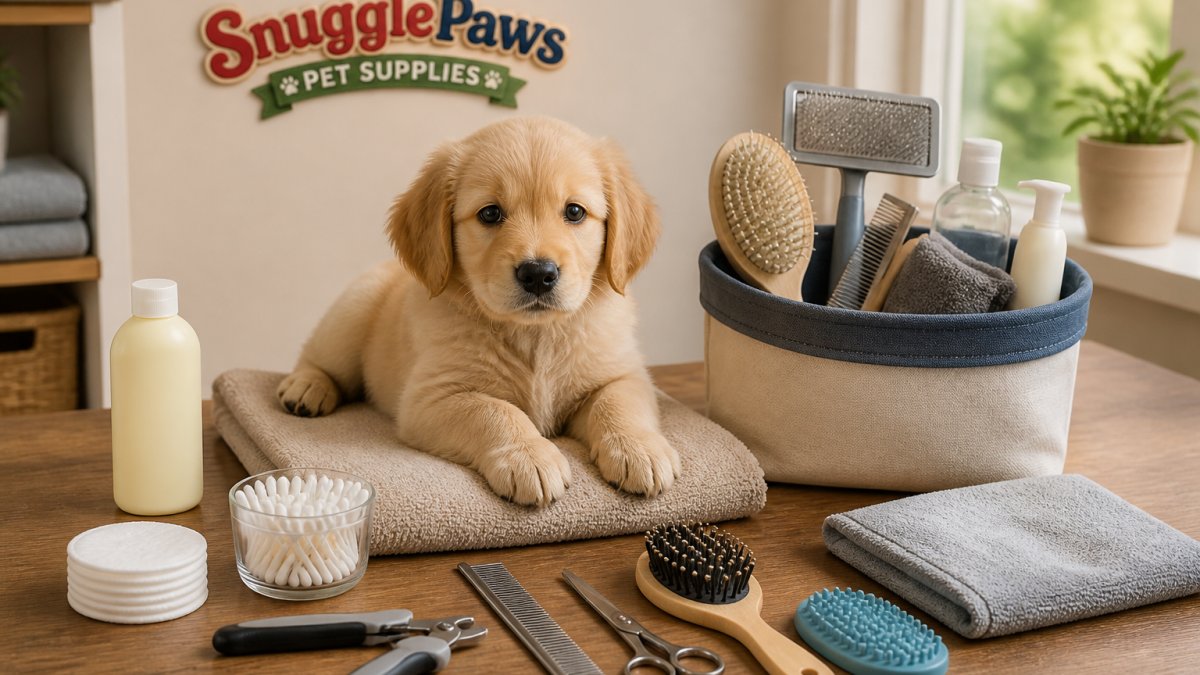
Table of Contents
- What Your Puppy Grooming Kit Needs: The Essentials
- Quick Comparison: Grooming Kits and Starter Bundles
-
Brushes and Combs for Different Coat Types
- Short, smooth coats (Labradors, Beagles, Boxers, Dachshunds)
- Long, silky coats (Golden Retrievers, Collies, Yorkshire Terriers, Setters)
- Curly and wool coats (Poodles, Bichons, Doodles)
- Double coats (German Shepherds, Huskies, Corgis, Akitas)
- Mixed and unknown coats
- Comb and brush mechanics that matter
- Bathing Supplies and Puppy-Safe Shampoo
- Nail Care Tools and How to Trim Safely
- Puppy Grooming Checklist: What to Have on Hand
-
Best Grooming Tools for Puppies and How to Use Them
- Brushes and combs: pressure, direction, and stopping points
- Bath brushes and massage tools: lather, don't scrub
- Nail trimmers and grinders: the quick, the angle, and when to stop
- Towels: wrap, don't rub
- Toothbrush and toothpaste: the slow build
- Ear cleaner and cotton balls: outer ear only
- Grooming wipes: between baths, not instead of them
- When to stop and call a professional
- How to Groom a Puppy: Safe, Step-by-Step Introduction
- Frequently Asked Questions
Last Updated: October 8, 2026
What Your Puppy Grooming Kit Needs: The Essentials
Building an essential grooming kit for new puppies doesn't require expensive equipment, a focused collection handles most tasks while keeping grooming gentle and stress-free.
The right kit keeps your puppy clean and healthy, makes grooming positive, and prevents coat and skin problems.
This guide covers what belongs in a grooming kit for new puppies, how to choose tools by coat type, and how to introduce grooming safely.
Key Takeaway
The best grooming kit for new puppies includes brushes matched to coat type, puppy-safe shampoo, nail care tools, a quality towel, and dental supplies. Start with these five categories and add specialized items only as your puppy's coat develops.
Quick Comparison: Grooming Kits and Starter Bundles
Should you buy individual items or a pre-assembled kit? It depends on coat type and budget.
| Kit Type | Best For | Price Range | What's Included |
|---|---|---|---|
| Individual essentials | Specific coat needs, budget-conscious owners | $50-$100 | Brush, shampoo, nail tool, towel |
| Basic starter bundle | First-time owners wanting simplicity | $80-$120 | Brush, shampoo, basic nail clippers, wipes |
| Premium grooming kit | Long-haired breeds, owners prioritizing quality | $120-$200 | Multiple brushes, specialized shampoo, nail grinder, dental kit |
Individual items give you control over quality and coat-specific selection. Pre-assembled kits save time and cost less, but may include tools your puppy's coat doesn't need.
For most new owners: start with individual essentials matched to your puppy's coat type, then add specialized items as grooming becomes routine.
Brushes and Combs for Different Coat Types
Brush choice decides whether grooming feels good or like a fight. Match the tool to the coat, not the breed label, puppies of the same breed can carry different coat densities, and mixed-breeds often combine two coat types.
Short, smooth coats (Labradors, Beagles, Boxers, Dachshunds)
These coats shed short, prickly hairs that weave into upholstery. A rubber curry or soft-bristle brush removes loose hair and massages skin without scraping. Brush two to three times a week; these coats rarely mat, so the goal is shedding control and skin inspection.
Long, silky coats (Golden Retrievers, Collies, Yorkshire Terriers, Setters)
Long coats form mats where hair rubs, behind the ears, under the collar, in the armpits, and along the belly. Start with a slicker brush, then follow with a metal comb to catch missed tangles. Work in small sections in the direction of growth, and never pull through a mat. Five-minute sessions daily or every other day beat one long weekly session.
Curly and wool coats (Poodles, Bichons, Doodles)
Curly coats shed little, so dead hair stays trapped and mats form close to the skin. A slicker alone skims the surface; you also need a metal comb to reach the base. Line-brush in layers: part the coat, brush a one-inch strip from skin outward, then move on. Without layering, mats hide under a smooth topcoat and surface at bath time.
Double coats (German Shepherds, Huskies, Corgis, Akitas)
These dogs carry a soft undercoat and a weather-resistant topcoat. An undercoat rake reaches the dense inner layer; a slicker finishes the topcoat. Do not shave a double coat, the topcoat regulates temperature and protects against sunburn, and shaving can permanently damage regrowth. Expect heavy shedding twice a year; daily raking during those weeks prevents matting.
Mixed and unknown coats
If you're not sure what your puppy will grow into, start with a slicker brush and a metal comb. These handle most coat types; add a rake or curry once the adult coat comes in, usually between six and twelve months. Puppy coats are softer and thinner than adult coats, so a tool that feels gentle now may be too light later.
Comb and brush mechanics that matter
- Slicker brush: fine wire pins on a padded head. Best for detangling and finishing. Let the pins glide, don't dig.
- Metal comb: the honest test. Run it through the coat after brushing; if it catches, you missed a tangle.
- Undercoat rake: wide teeth that reach the undercoat. Use short strokes and clean the teeth often.
Pro Tip
Do a two-minute "comb check" after every brushing session. Run a metal comb from skin outward along the back, sides, belly, and behind the ears. Any snag you find now is a tangle you won't be cutting out later.
Watch Out
Never use a human hairbrush or a detangling spray meant for people. Human brushes are designed for finer, less dense hair and can scratch a puppy's skin, and human products may contain ingredients and fragrances that irritate a puppy's coat and skin.
The Alloy Steel Pet Grooming And Detangling Comb ($17.00) works across coat types for detailed work. For puppies with short coats, the Easy Clean Nylon Pet Paw Grooming Brush ($8.30) provides gentle massage and hair removal without harsh bristles.

Bathing Supplies and Puppy-Safe Shampoo
Bathing frequency depends on coat, activity level, and skin condition. Most puppies need bathing every 4-8 weeks; active outdoor puppies may need more.
Puppy-safe shampoo avoids harsh detergents that dry out developing skin. Look for products designed for puppies or sensitive skin, adult dog shampoos can irritate young skin.
The Pet Shampoo Bath Massage Grooming Brush ($9.03) applies shampoo, massages, and removes loose hair simultaneously.

After bathing, quick drying prevents chilling.
Watch Out
Never use hot water with puppies. Warm water (around 85-90°F) is safer for developing skin. Test temperature on your inner wrist before bathing your puppy. Cold water shocks young dogs and causes stress.
Nail Care Tools and How to Trim Safely
Puppy nails grow quickly and need trimming every 3-4 weeks. Long nails cause discomfort, affect walking posture, and can split painfully.
Two tool types exist: traditional clippers and electric grinders. Clippers work quickly but require steady hands.
The Pet Nail Trimmer Grooming Tool ($17.46) uses USB charging and operates quietly.

Never trim into the pink area, which contains blood vessels and nerves.
Puppy Grooming Checklist: What to Have on Hand
This checklist covers items every new puppy owner should have before bringing their puppy home.
- Brush or comb matched to coat type
- Puppy-safe shampoo (pH-balanced for young skin)
- Bath brush or massage tool for lathering and massage
These essentials cover grooming needs for the first 6-12 months. As coat development continues, you may add specialized tools like undercoat rakes or thinning shears, but these core items handle routine grooming effectively.
Alloy Steel Pet Grooming And Detangling Comb →
Best Grooming Tools for Puppies and How to Use Them
Knowing which tool to buy is half the job; using it without hurting or scaring your puppy is the other half. The techniques below focus on the mistakes that send owners to the vet or groomer, cut quicks, scratched skin, shampoo left in the coat, and puppies that learn to fear the table.
Brushes and combs: pressure, direction, and stopping points
Use gentle, short strokes in the direction of hair growth. Pressing harder doesn't remove more hair, it just scratches skin. For long and curly coats, work in sections: part the coat, brush a one-inch strip from skin outward, then move on. Stop the moment your puppy pulls away, lip-licks, yawns, or freezes; those are early stress signals, and pushing past them creates lifelong grooming resistance. A two-minute session that ends calmly beats a ten-minute struggle.
Bath brushes and massage tools: lather, don't scrub
A bath brush or massage mitt applies shampoo evenly and lifts loose hair while stimulating circulation. Use circular motions and light pressure, the goal is lather distribution, not scrubbing. Dilute shampoo in warm water first if the label allows; concentrated shampoo is harder to rinse and can leave irritating residue. Work from the neck down, avoiding eyes, ears, and muzzle, and rinse until the water runs clear, usually two to three times longer than you think necessary.
Nail trimmers and grinders: the quick, the angle, and when to stop
Nail trims are where most injuries happen. The pink "quick" contains blood vessels and nerves and grows further down as nails lengthen. On clear nails, trim only the curved tip, stopping a couple of millimeters before the pink. On dark nails, trim in thin slices and check the cut surface, a gray or pink dot means you're close and should stop.
For clippers, position the blade perpendicular and squeeze firmly in one motion; hesitating crushes the nail. For grinders, hold at a slight angle and touch the spinning surface for one to two seconds at a time, lifting between passes so the nail doesn't overheat.
If you cut the quick, stay calm. Press styptic powder onto the tip and hold gentle pressure. Don't scold the puppy or stop abruptly; finish with a treat so the next trim isn't associated with the accident.
Watch Out
Never use human nail clippers on a puppy. They are shaped for flat human nails and can split or crush a dog's thicker, curved nail. Use clippers or a grinder designed for dogs, and replace dull blades, a dull clipper crushes rather than cuts.
Towels: wrap, don't rub
Vigorous rubbing tangles long coats and can chill a puppy. Press the towel against the coat to absorb water, then wrap your puppy in a second towel and hold them while they settle. Microfiber absorbs more per pass than cotton, shortening drying time. Pay attention to the belly, paws, and ears, the spots that stay damp longest.
Toothbrush and toothpaste: the slow build
Use a finger brush or soft puppy toothbrush and enzymatic dog toothpaste in a flavor your puppy likes. Never use human toothpaste, fluoride and xylitol are toxic to dogs. Start by letting your puppy lick the paste off your finger, then rub it on the teeth, then introduce the brush. Aim for a few seconds per side at first. Daily brushing is ideal; three to four times a week still meaningfully reduces plaque.
Ear cleaner and cotton balls: outer ear only
Apply a dog-specific ear cleaner to a cotton ball and wipe the visible folds of the outer ear. Never push cotton swabs into the ear canal, you can pack debris deeper or perforate the eardrum. If ears smell yeasty, look red, or produce dark discharge, see a veterinarian; those are signs of infection.
Grooming wipes: between baths, not instead of them
Puppy-safe wipes handle paw cleanup, rear-end touch-ups, and quick coat refreshes between baths. Choose fragrance-free wipes and avoid alcohol or harsh detergents. Wipes don't replace bathing, brushing, or dental care, they're a convenience tool.
When to stop and call a professional
Stop and seek help if:
- Your puppy panics, snaps, or tries to bite during handling, a certified trainer or veterinarian can help desensitize before the behavior hardens.
- You cannot see or safely estimate the quick on thick dark nails.
- The coat has tight mats close to the skin, cutting these out at home risks slicing skin.
Best For
Puppies under 16 weeks old benefit most from short, frequent grooming sessions (5-10 minutes) rather than marathon grooming days. This builds positive associations and prevents grooming anxiety later.
A common pattern among new owners is buying every tool at once and using each one badly. Pick one task per week, brushing, then nails, then teeth, and get comfortable before adding the next. Quality tools help, but calm, confident handling is what your puppy remembers.
How to Groom a Puppy: Safe, Step-by-Step Introduction
Week 1-2: Familiarization Let your puppy see and sniff grooming tools without using them.
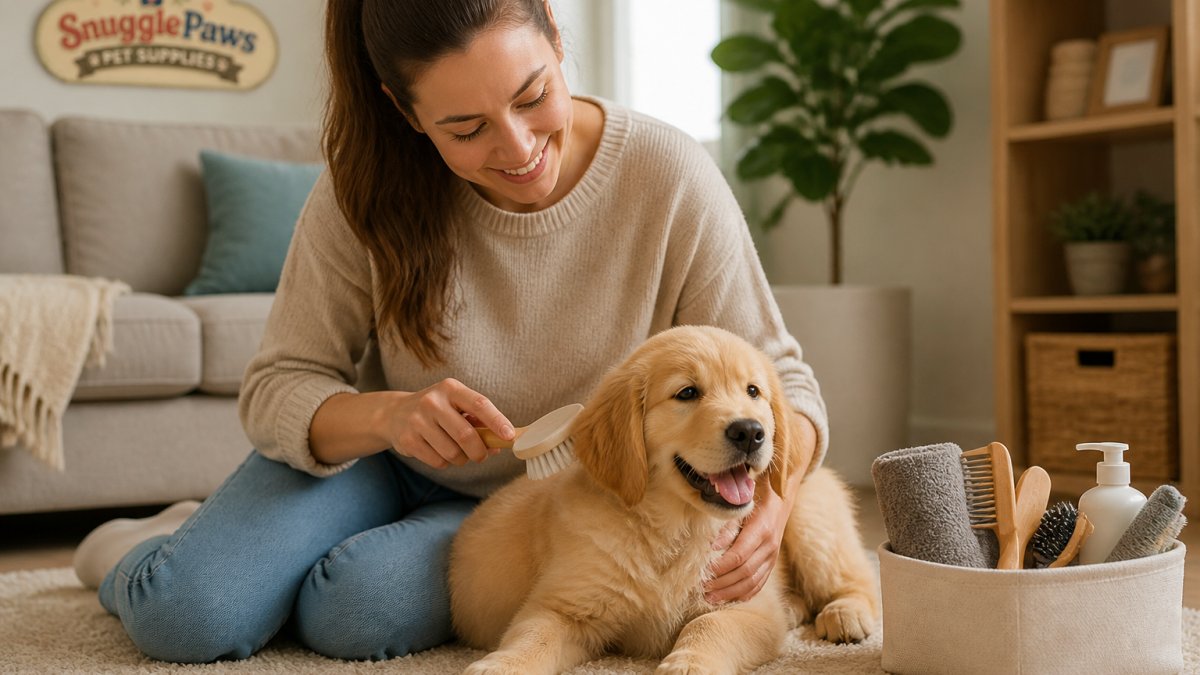
Week 5-6: Bathing introduction Use warm (not hot) water.
Ongoing: Consistency and reward Groom on a regular schedule so your puppy expects it.
Common mistakes include grooming too aggressively, sessions that last too long, and skipping familiarization.
SnugglePawsPetSupplies provides the tools to make grooming manageable, but your approach and consistency determine success.
Frequently Asked Questions
What should be in a puppy grooming kit?
A complete grooming kit includes brushes and combs for your puppy's coat type, puppy-safe shampoo, a soft bath brush, nail clippers or grinder, and a microfiber towel for quick drying. Start with the essentials, then add specialized tools based on your puppy's coat type. Most puppies benefit from a gentle brush and nail care tool as foundational grooming supplies.
When can you start brushing a puppy?
You can start brushing your puppy as early as 8 weeks old using a soft, gentle brush. Begin with short sessions to help your puppy get used to the grooming routine. Early introduction builds positive grooming habits and helps your puppy stay comfortable with handling. Use a light touch and keep sessions brief (5-10 minutes) until your puppy is older and more accustomed to the process.
How often should you groom a puppy?
Grooming frequency depends on your puppy's coat type. Short-coated puppies need brushing 1-2 times weekly, while long-coated breeds require 3-4 times per week or daily to prevent matting. Bath time for puppies typically happens every 4-6 weeks unless they get dirty. Nail trimming should occur every 3-4 weeks. Start a regular schedule early so your puppy becomes comfortable with grooming as part of routine care.
Can you use regular dog shampoo on a puppy?
Puppies have more sensitive skin than adult dogs, so use a puppy-safe shampoo specifically formulated for young dogs. Puppy shampoos are gentler and designed for developing skin. Regular adult dog shampoo may be too harsh and cause irritation. Always check product labels to confirm the shampoo is appropriate for puppies, and introduce bathing gradually with warm water and a calm environment to build positive bath-time associations.
How do you trim a puppy's nails safely?
Use a pet nail trimmer or grinder designed for puppies, and trim only the clear or white part of the nail, avoiding the pink quick inside. Trim every 3-4 weeks or when nails touch the ground while walking. Keep styptic powder nearby to stop bleeding if you accidentally cut the quick. Start with short sessions and positive reinforcement so your puppy stays calm during nail care. If you're unsure, ask your veterinarian to demonstrate the proper technique.
Starting your puppy off with proper grooming tools and techniques prevents behavioral problems and keeps their coat healthy throughout their life. A well-groomed puppy is a healthier, happier puppy. SnugglePawsPetSupplies offers premium grooming essentials designed specifically for young dogs, with fast shipping and easy returns so you can build your kit with confidence. Check Out our grooming collection and give your puppy the foundation for a lifetime of positive grooming experiences.

