

Cart
0
Table of Contents
- Why Choosing Safe Puppy Toys Matters
- Step 1: Assess Your Puppy's Age and Development Stage
- Step 2: Identify Your Puppy's Chewing Style
- Step 3: Understand Choking Hazards in Puppy Toys
- Step 4: Select Durable Puppy Chew Toys with Safe Materials
- Step 5: Inspect and Maintain Toys Regularly
- How to Clean Puppy Toys for Safety and Longevity
- Frequently Asked Questions
Last Updated: October 2, 2026
Why Choosing Safe Puppy Toys Matters
Selecting safe puppy toys is critical, puppies explore the world through their mouths, and the wrong toy can cause serious injury, choking, or intestinal blockages requiring emergency surgery.
Puppies don't understand the difference between safe and dangerous toys, they chew what feels good. As a responsible owner, you must eliminate hazards before they become emergencies.
The right toys also support healthy development: they relieve teething pain, build jaw strength, reduce destructive chewing, and provide outlets for natural instincts.
Step 1: Assess Your Puppy's Age and Development Stage
Age determines appropriate safe puppy toys, but breed size and expected adult jaw strength matter equally.
Puppies 8-12 weeks old are most vulnerable. Their emerging teeth and weak jaws cannot break apart toys, making choking hazards critical risks.
For small-breed puppies (under 15 kg adult weight), use soft rubber toys designed for teething.
Puppies 3-6 months old develop stronger jaws and adult teeth.
Small-breed puppies can use slightly more durable toys with supervision.
Large-breed puppies develop jaw strength rapidly and may exert significant bite force at 4 months.
Puppies 6+ months old have nearly all adult teeth and stronger jaws. They can handle more durable toys, but supervision remains critical.
Small-breed puppies have largely completed jaw development. Toys should focus on durability and enrichment while remaining appropriately sized.
Large-breed puppies approach adult jaw strength, a 6-month-old may exert 200+ pounds of bite force. Toys must be extremely durable and sized for a large mouth.
Key Takeaway
Breed-specific sizing matters as much as age. A toy that is "age-appropriate" for a 4-month-old may be dangerously undersized if the puppy will weigh 40 kg as an adult. When selecting toys, research your puppy's expected adult size and jaw strength, not just the current age.
How to determine your puppy's expected adult size: For purebreds, research breed standards through the American Kennel Club (AKC). For mixed breeds, consider parent size or consult your veterinarian for an estimate based on current growth rate.
Matching toy size to puppy size: The toy should be large enough that the puppy cannot swallow it but small enough to carry comfortably.
Step 2: Identify Your Puppy's Chewing Style
Not all puppies chew the same way. Some are gentle chewers who mouth toys without aggression. Others are power chewers who attack toys with intense jaw pressure. Matching the toy to the chewing style prevents damage and choking hazards.
Gentle chewers mouth and lick toys without aggressive biting. These puppies can use a wider range of safe puppy toys, including plush toys with squeakers (under supervision).
Moderate chewers apply steady pressure without destroying toys instantly. They benefit from durable rubber and nylon chews.
Power chewers demolish toys quickly and aggressively. They need reinforced rubber or nylon toys that withstand intense jaw pressure; standard toys create choking hazards.
Observe your puppy for a few days before investing heavily in toys. Does it mouth gently or bite hard? Try to tear toys apart or simply gnaw? While larger breeds typically become power chewers and smaller breeds may remain gentle chewers, individual temperament varies widely, so observation matters more than breed assumptions.
Step 3: Understand Choking Hazards in Puppy Toys
Choking hazards are the leading cause of toy-related injuries in puppies. Understanding what creates risk helps eliminate danger before it reaches your puppy.
Small detachable parts pose the most obvious risk. Squeakers, buttons, bells, and plastic eyes can all become lodged in the puppy's throat or digestive system.
Loose threads and seams create a different kind of danger. A puppy pulls a thread from a toy's seam, swallows it, and the thread becomes tangled in the intestines.
Stuffing material from plush toys can cause obstruction if ingested in large quantities. Puppies may tear open toys and consume the filling.
Rawhide chews can splinter, soften into chunks that are swallowed whole, or cause intestinal blockages. Rawhide is generally not recommended for puppies.
Cooked bones splinter and create sharp fragments that can perforate the digestive tract. Never give puppies cooked bones; raw bones carry bacterial contamination risks. Avoid bones entirely when in doubt.
Toys with small openings can become stuck on the puppy's jaw or teeth. Ensure any toy is sized appropriately. If a part can be removed, torn off, or swallowed, it shouldn't be in the toy.
Step 4: Select Durable Puppy Chew Toys with Safe Materials
Material safety determines whether a toy supports healthy chewing or creates toxicity risks. Not all materials are created equal, and marketing claims often outpace actual safety verification.
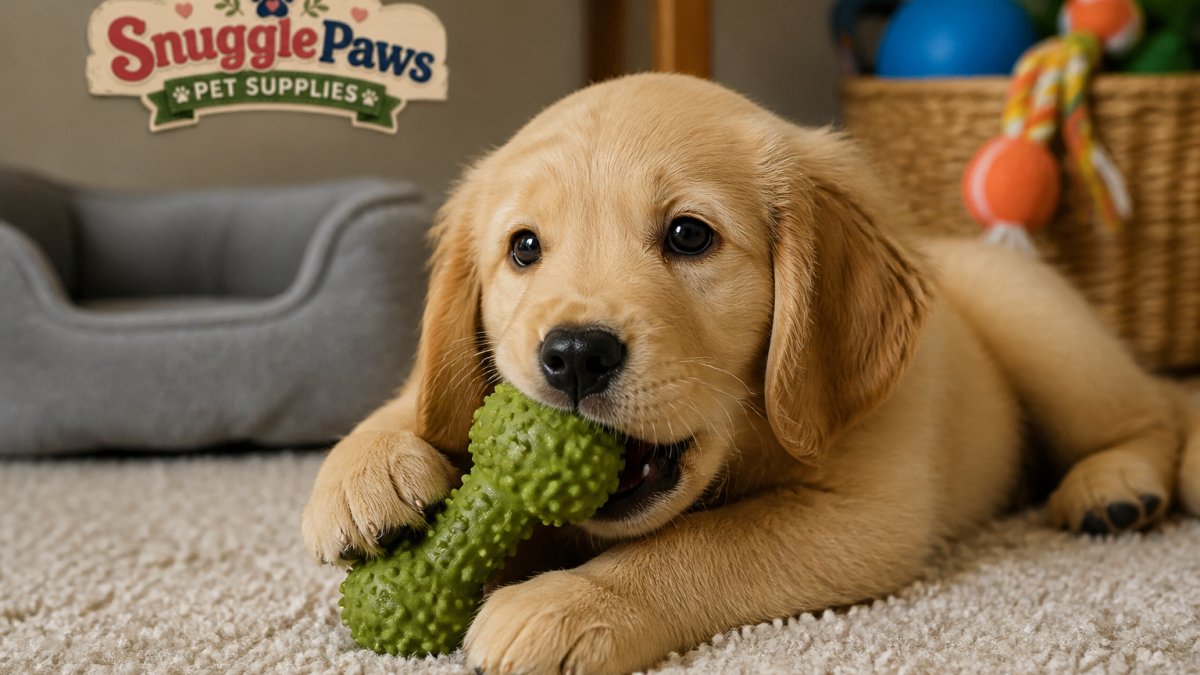
Natural rubber toys are among the safest options, durable, non-toxic, and resistant to tearing. Natural rubber is free from BPA and phthalates.
Nylon toys offer durability, though quality varies. High-quality nylon resists splintering; lower-quality nylon cracks and creates sharp fragments. Choose toys from manufacturers providing third-party testing documentation and certified as phthalate-free.
Durable Cactus Pet Interactive Chew Toy →
Rope toys work for supervised play only. Puppies may pull threads and develop intestinal blockages.
Plastic toys require careful evaluation. Some contain BPA and phthalates, which can disrupt endocrine function. Look for toys labeled "BPA-free" and "phthalate-free" with third-party certifications from NSF International or UL.
Fabric and plush toys are only safe for gentle chewers under supervision, never leave them alone with a puppy. Verify stuffing is non-toxic polyester or organic cotton, not recycled materials.
How to verify material safety claims: Manufacturers often use vague language without substantiation.
Watch Out
Be skeptical of toys labeled "natural" without further specification. Natural materials can still harbor bacteria, mold, or contaminants. "Natural" does not automatically mean "safe" or "non-toxic."
SnugglePawsPetSupplies offers several options for safe puppy toys. The Durable Cactus Pet Interactive Chew Toy is made with bamboo fiber and rubber, providing a safe, durable option for puppies of all sizes. The textured surface helps with teething while the durable construction resists tearing. For puppies that need more engagement, the Bite Resistant Rubber Pet Chew Toy comes in sizes suited to puppies from under 9 kg to over 30 kg, ensuring size-appropriate options for your puppy's developmental stage.

Always check the material list before purchasing. If ingredients aren't listed or seem unclear, contact the manufacturer.
Step 5: Inspect and Maintain Toys Regularly
A toy that's safe when new can become dangerous as it wears. Regular inspection catches problems before they cause injury.
Inspect toys weekly for signs of damage. Look for:
- Cracks or splits in the material
- Pieces coming loose or detaching
- Exposed seams or stuffing
- Discoloration or strange odors
- Rough edges that could cut gums
Remove toys immediately if damage appears. Don't wait for the next inspection. A toy with a developing crack can break completely during play, creating instant choking hazards.
Replace toys seasonally or as needed. Even durable toys wear out. A toy that lasted three months may need replacement before the next season. This is normal wear, not a sign of poor quality.
Rotate toys to extend their life and maintain interest. Puppies get bored with the same toys. Rotating toys keeps play fresh while allowing damaged toys to be removed from circulation.
Watch for behavioral changes that suggest a toy is becoming unsafe. If a puppy suddenly stops playing with a toy or plays with it differently, inspect it carefully. The puppy may sense that something is wrong.
Don't rely solely on manufacturer recommendations for replacement timing. Your puppy's chewing style may wear toys faster or slower than average. Personal observation matters more than general guidelines.
How to Clean Puppy Toys for Safety and Longevity
Cleaning extends toy life and reduces bacterial growth that could make puppies sick. Regular cleaning is part of responsible toy maintenance.
Wash toys weekly with warm water and mild dish soap. Use a soft brush to clean crevices where bacteria accumulate.
Air dry toys completely before returning them to the puppy. Moisture promotes mold growth and bacterial contamination.
For rubber toys, avoid harsh chemicals or bleach. These can degrade the material and potentially create toxic residues. Warm soapy water is sufficient.
For rope toys, machine washing on a gentle cycle works well. Ensure the rope dries completely before play, as damp rope is more likely to shed fibers.
Inspect during cleaning. This is the perfect time to spot damage that might be missed during casual observation.
Store toys in a clean, dry location. A toy box or bin keeps toys organized and protected from contamination. Ensure the storage area is away from extreme temperatures or humidity.
Choosing safe puppy toys requires attention to age, chewing style, materials, and ongoing maintenance. The effort prevents emergencies and supports healthy development.
American Veterinary Medical Association guidelines on pet safety
Pet Poison Helpline resource on toxic materials in toys
Consumer Product Safety Commission standards for pet products
Frequently Asked Questions
What materials should I avoid when buying puppy toys?
Avoid rawhide, cooked bones, and plastic toys that contain BPA or phthalates, as these can cause intestinal blockages or chemical poisoning. Skip toys with small detachable parts like buttons or squeakers that pose choking hazards. Also avoid toys made from materials that splinter or break easily, such as certain low-quality plastics or thin rubber. Look for toys made from natural rubber, nylon, or bamboo fiber instead, which are safer and more durable for growing puppies.
How do I know if a puppy toy is the right size?
The toy should be larger than your puppy's mouth so it cannot be swallowed whole. A general rule is to choose toys that are at least as wide as your puppy's head. For the Bite Resistant Rubber Pet Chew Toy, puzzle bone size S is suitable for within 9kg, puzzle bone size M is suitable for 7-16kg, and puzzle bone size L is suitable for 13-30kg. Always supervise playtime with new toys to ensure the size is appropriate for your individual puppy's mouth and chewing strength.
How often should I inspect my puppy's toys for damage?
Inspect toys at least once a week, or more frequently if your puppy is an aggressive chewer. Look for signs of wear and tear such as cracks, loose pieces, torn seams, or flattened areas. Remove any toy that shows damage immediately, as damaged toys increase the risk of ingestion and gastrointestinal blockage. Puppies that are teething or power chewers may need daily inspections since they can damage toys more quickly than gentle chewers.
Are squeaky toys safe for puppies?
Squeaky toys can be safe if the squeaker is securely attached and cannot be removed or swallowed. Avoid toys where the squeaker is loose or easily accessible. Supervise your puppy during play with squeaky toys, especially during the teething phase when puppies are more likely to chew aggressively. If your puppy shows interest in destroying the toy to reach the squeaker, remove it immediately and choose a solid, non-squeaking alternative instead.

