

Cart
0
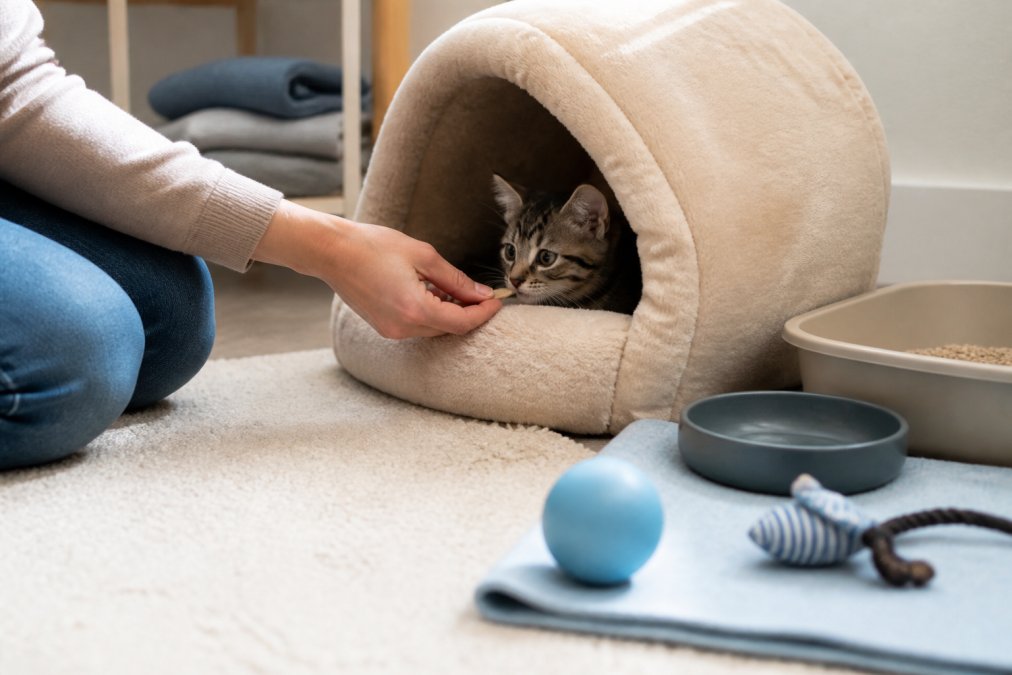
Table of Contents
- Understanding Anxiety in Rescued Kittens
- Signs of Anxiety in Kittens: What to Watch For
- The 3-3-3 Rule for Cats: A Timeline for Adjustment
- Creating a Safe Haven: Environmental Setup
- Using Calming Pheromones for Cats to Reduce Stress
- Building Routine and Predictability
- Mental Stimulation and Play for Anxious Kittens
- Integrating Multiple Pets and Managing Multi-Kitten Households
- Frequently Asked Questions
Last Updated: September 19, 2026
Understanding Anxiety in Rescued Kittens
Anxiety in rescued kittens is a natural response to unfamiliar environments, new people, and sudden changes. They've lost their previous territory, routines, and social bonds, triggering behavioral and physical responses that owners often mistake for aggression or aloofness.
The good news: learning how to manage anxiety in rescued kittens is achievable with the right approach. Most anxious kittens settle into their new homes within weeks when given proper support, predictability, and space.
Rescued kittens often come from shelters, outdoor environments, or neglectful situations with heightened nervous systems. A loud noise, unfamiliar person, or sudden movement can trigger a fear response that sets back progress.
Key Takeaway
Anxiety in rescued kittens isn't a personality flaw, it's a survival response to environmental change. Recognition and patience are the first steps toward helping your kitten adjust.
Signs of Anxiety in Kittens: What to Watch For
Recognizing anxiety early prevents stress from deepening into behavioral problems. Anxious kittens display clear signals through body language, vocalizations, and habits. Learning to decode these signs helps owners intervene correctly.
Fear-Based Anxiety Signals
Physical signs of fear include:
- Ears pinned flat against the head or rotated backward
- Pupils dilated (wide and round)
- Body crouched low or pressed against walls
- Tail tucked tightly between hind legs or wrapped around the body
- Whiskers pulled back toward the face
- Piloerection (fur standing on end), often in a thin line down the spine rather than fully puffed
- Trembling or muscle tension visible in the shoulders and hindquarters
Behavioral signals of fear-based anxiety:
- Hiding for extended periods (more than a few hours at a time)
- Freezing when approached, showing no response to toys or treats
- Hissing, growling, or swatting defensively when cornered
- Refusing to use the litter box outside the safe space (litter box avoidance signals the kitten feels unsafe in that location)
- Excessive vocalization: crying, meowing, or yowling, especially at night
- Avoiding human contact entirely or only accepting interaction in the safe haven
- Loss of appetite or changes in eating patterns
Boredom or Understimulation Signals
Boredom-based anxiety emerges after 3-4 weeks when the kitten has settled but lacks mental engagement and hasn't bonded deeply with the owner.
Physical signs of boredom-based anxiety:
- Normal ear position (forward or slightly to the side)
- Pupils normal size
- Body posture relaxed or slightly restless
- Tail held upright or moving in slow, deliberate sweeps
- Excessive grooming or hair loss from repetitive self-soothing
- Pacing or circling behaviors
Behavioral signals of boredom-based anxiety:
- Destructive behavior: scratching furniture, chewing on cords, or knocking items off surfaces
- Excessive meowing or attention-seeking vocalizations (different tone than fear-based crying, more insistent and directed at humans)
- Attacking hands or feet during interaction
- Jumping or climbing excessively
- Seeking interaction but then biting or scratching when touched
- Litter box habits remain normal, but the kitten may eliminate outside the box due to frustration rather than fear
Overstimulation Signals
Overstimulation occurs when anxious kittens receive too much sensory input or play too quickly. The kitten's body language shifts from engaged to defensive mid-interaction.
Physical signs of overstimulation:
- Ears rotate backward or flatten
- Tail thumps rapidly or swishes side to side with increasing speed
- Skin ripples along the back
- Pupils dilate suddenly
- Body becomes tense despite initial relaxation
- Whiskers move forward then back rapidly
Behavioral shift:
- Kitten was calm or playful, then suddenly bites, scratches, or hisses
- Kitten retreats to hiding spot immediately after interaction
- Kitten refuses further contact for hours
Litter Box Behavior as a Diagnostic Tool
Litter box habits reveal anxiety type: avoidance signals fear; inconsistent use with normal appetite suggests boredom. Changes in sleep patterns indicate a stressed nervous system regardless of anxiety type.
Watch Out
If a kitten shows loss of appetite for more than 24 hours, excessive vomiting, diarrhea, or blood in urine or stool, consult a veterinarian immediately. These can signal medical issues (urinary tract infection, parasites, digestive upset) that mimic or compound anxiety symptoms and require treatment.
Using Body Language to Guide Your Response
Fear-based anxiety requires more time in the safe haven and reduced stimuli. Boredom-based anxiety needs enrichment and play. Overstimulated kittens need shorter interaction windows. Matching intervention to anxiety type is critical.
The 3-3-3 Rule for Cats: A Timeline for Adjustment
The 3-3-3 rule for cats breaks the adjustment process into three phases of roughly three weeks each, guiding realistic expectations for how to manage anxiety in rescued kittens.
Week 1-3: The Hiding Phase
During weeks 1-3, rescued kittens typically hide while processing their environment and assessing safety. Provide food, water, and a litter box near the hiding space and let the kitten emerge at their own pace.
Week 4-9: The Exploration Phase
Around week 4, kittens venture from hiding spots and show curiosity. Gentle play and positive reinforcement begin as the kitten builds trust.
Week 10+: The Bonding Phase
By week 10, most rescued kittens show significant personality and seek attention. Some need longer depending on age, previous experiences, and personality.
Creating a Safe Haven: Environmental Setup
A safe haven is the foundation for managing anxiety in rescued kittens. This dedicated space gives the kitten control, reduces sensory overload, and accelerates adjustment.
The safe haven should be a smaller room (bedroom, bathroom, or closet) containing a litter box, food and water bowls, hiding spots, and a comfortable bed. Keep it quiet and away from household traffic.
Hiding spots are essential. Kittens feel safer when they can observe their surroundings from a concealed position. Use cardboard boxes, cat tunnels, or furniture with enclosed spaces. The American Feline Medical Association emphasizes that vertical space and hiding options reduce stress significantly in anxious cats.
Pet Anxiety Warm Vest Jacket →
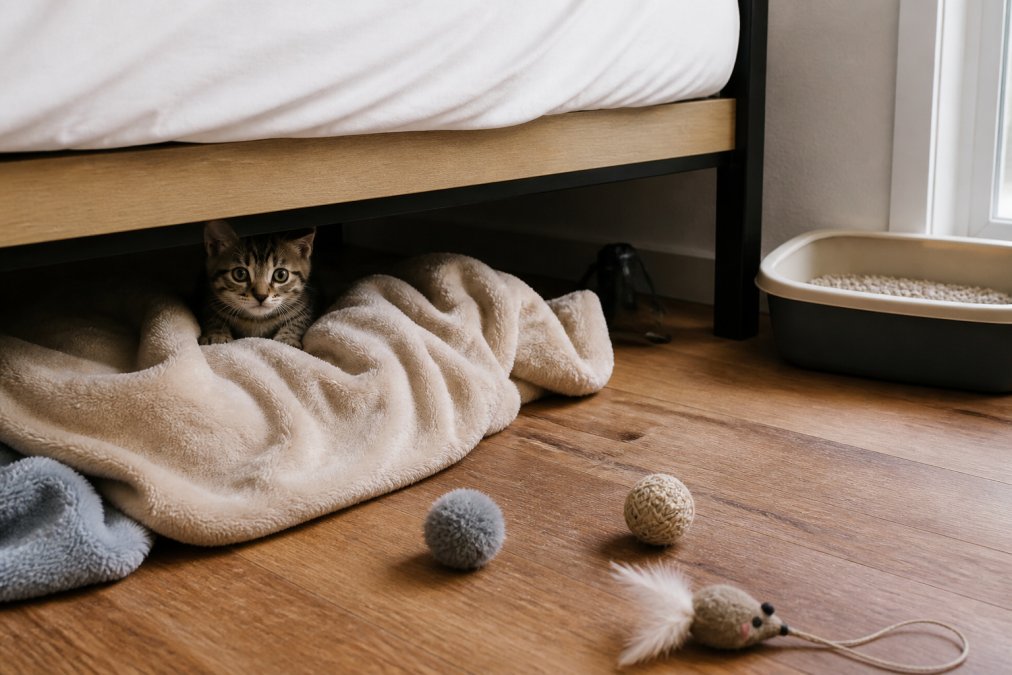
Soft, comfortable bedding encourages rest and signals safety. The Calming Round Plush Pet Bed Cushion from SnugglePawsPetSupplies (40cm to 80cm) provides a cozy refuge with a donut shape that gives kittens a sense of enclosure.

Environmental predictability reduces stress. Keep lighting consistent, avoid sudden loud noises, and maintain regular feeding and play schedules.
Pro Tip
Place the safe haven away from appliances like washing machines or air conditioning units. Unexpected mechanical sounds trigger anxiety in already-stressed kittens.
Using Calming Pheromones for Cats to Reduce Stress
Calming pheromones for cats mimic natural scents that mother cats produce to soothe their kittens, signaling safety and reducing anxiety without sedation.
Pheromone products come in diffusers (best for safe havens), sprays (for bedding and carriers), and wipes (portable for travel).
Rescued kittens recognize pheromone scents as calming signals, reducing stress hormones and allowing normal behavior to emerge without drowsiness.
Calming pheromones for cats reduce hiding behavior and increase social interaction within days. Consistent use over several weeks produces the strongest results.
Start pheromone therapy immediately. Use diffusers in the safe haven and main living areas. Spray bedding or carriers before vet visits or travel if needed.
Key Takeaway
Pheromone therapy is most effective when combined with environmental management and routine. Pheromones alone won't solve anxiety, but they significantly support the kitten's ability to adjust.
Building Routine and Predictability
Rescued kittens have lost all familiar routines. Rebuilding structure through predictability signals safety to a stressed nervous system.
Establish fixed times for feeding, play, and interaction. Consistent routines help regulate the kitten's sleep-wake cycle and decrease anxiety.
Keep the household environment stable during adjustment. Avoid rearranging furniture or introducing new people too quickly, as each change triggers re-evaluation and anxiety.
Let interaction follow the kitten's lead.
Mental Stimulation and Play for Anxious Kittens
Play burns energy and builds confidence. Mental stimulation redirects anxiety into productive activity. Age-appropriate, anxiety-matched enrichment shows faster adjustment and fewer stress-induced behaviors.
Enrichment by Anxiety Stage
Weeks 1-3 (Hiding Phase): Minimal, Non-Demanding Enrichment
During weeks 1-3, kittens are in survival mode. Enrichment should be passive and non-threatening.
Weeks 4-9 (Exploration Phase): Low-Pressure Interactive Play
Weeks 10+ (Bonding Phase): Varied, Engaging Enrichment
Enrichment by Anxiety Type
For Fear-Based Anxiety: Provide multiple hiding spots and vertical spaces. Use toys that encourage independent play. Avoid sudden movements or loud toys. Reward any interaction with treats or praise.
Age-Specific Enrichment Guidelines
8-12 Weeks Old: Multiple short play sessions (5 minutes, 4-5 times daily). Toys that encourage pouncing, climbing opportunities, and puzzle feeders.
Enrichment Tools That Support Anxiety Management
Effective enrichment items: enclosed spaces, vertical structures, puzzle feeders, wand toys, and soft toys. Rotate toys regularly to maintain engagement without overwhelming the kitten.
Key Takeaway
Mental stimulation is most effective when matched to the kitten's anxiety stage, anxiety type, and age. Generic play advice misses the mark for anxious kittens. Tailor enrichment to where the kitten is developmentally, and adjust as they progress through the adjustment timeline.
Integrating Multiple Pets and Managing Multi-Kitten Households
Introducing a rescued kitten to existing pets requires careful planning. Gradual exposure prevents conflict and allows positive associations to form.
Frequently Asked Questions
What is the 3-3-3 rule for rescue cats?
The 3-3-3 rule is a timeline for how rescued cats adjust to their new home. The first 3 days, your kitten is overwhelmed and may hide. The first 3 weeks, they begin to show their personality but still feel uncertain. By 3 months, they're truly comfortable and bonded to you. Understanding this timeline helps you avoid pushing your kitten too fast and reduces anxiety by respecting their adjustment pace.
How can I tell if my rescue kitten is suffering from anxiety?
Common signs of anxiety in kittens include excessive hiding, loss of appetite, over-grooming or hair loss, litter box avoidance, excessive vocalization, and reduced playfulness. Some kittens may also show destructive behavior or become unusually clingy. If these signs persist beyond the first few weeks or worsen, consult your veterinarian to rule out medical issues and discuss behavioral support options.
Do calming pheromones for cats actually work?
Calming pheromones mimic natural feline pheromones that help kittens feel safe. Diffusers and sprays can be used to reduce stress-related behaviors. While results vary by kitten, many owners report improved confidence and reduced hiding within days of use. They're most effective when combined with environmental enrichment, routine, and positive interactions.
How long does it typically take for a rescue kitten to adjust to a new home?
Most rescue kittens show visible improvement within 3-4 weeks, though full adjustment takes about 3 months. Younger kittens (under 8 weeks) often adapt faster than older kittens or cats. Factors like prior socialization, temperament, and your home environment affect the timeline. Patience and consistency with routines significantly speed up the adjustment process and reduce anxiety-related behaviors.

