

Cart
0

Table of Contents
- Best Calming Beds for Rescue Dogs: Quick Comparison
- Signs of Anxiety in Rescue Dogs: What to Watch For
- Top Calming Beds for Rescue Dogs
- How to Help a Rescue Dog Adjust to a New Home
- How to Clean a Calming Dog Bed
- Choosing the Right Size and Features for Your Rescue Dog
- Conclusion
- Frequently Asked Questions
Last Updated: September 15, 2026
Best Calming Beds for Rescue Dogs: Quick Comparison
Rescue dogs arrive home carrying stress from shelter life, and the best calming beds for rescue dogs give them a secure, familiar place to decompress from day one. At SnugglePawsPetSupplies, we understand how a donut-style bed with raised edges can help settle a dog that paces, pants, or refuses to rest. This guide compares our top picks, explains anxiety in newly adopted dogs, and shows you how to help a rescue adjust.
Below, we break down sizing, materials, and washing so you can choose a bed that supports sleep quality, joint health, and stress reduction.
| Bed | Price | Sizes | Best For |
|---|---|---|---|
| Calming Round Plush Pet Bed Cushion | $34.52 | S to XL | Anxious dogs who love to curl |
| Machine Washable Calming Plush Pet Bed Cushion | $26.96 | S to L | Messy eaters and easy cleanup |
| Non-Slip Round Plush Pet Bed Cushion | $21.09 | 40-80 cm | Hardwood and tile floors |
| Round Cotton Pet Winter Sleeping Bed | $71.73 | 40-120 cm | Larger breeds and joint pain |
| Soft Thick Plush Round Pet Bed Cushion | $54.02 | Multiple | Nervous pups needing neck support |
What Sets These Beds Apart
A calming bed works differently from a standard mat. The raised rim mimics the bolstered enclosure a dog would dig into in the wild, triggering nesting and self-soothing. High-loft fiber and faux fur hold body heat, while orthopedic support cushions pressure points for older rescues with joint pain.

The difference between a bed that helps and one that sits unused comes down to three things: a rim high enough to lean against, a base firm enough to support joints, and a cover you can actually wash.
Signs of Anxiety in Rescue Dogs: What to Watch For
Anxiety in rescue dogs rarely looks like the cowering dog on the shelter flyer. More often it shows up as pacing, excessive panting, destructive chewing, or refusing to settle even when visibly tired. Many newly adopted dogs also follow their person room to room, whine at night, or freeze at loud noises.
Watch for these specific behaviors in the first few weeks:
- Pacing in circles before lying down, or never lying down at all
- Drooling, lip licking, or yawning outside of mealtimes
- Destructive chewing on door frames, furniture, or shoes
- House soiling despite regular potty breaks
- Hiding under beds, behind sofas, or in closets
- Clinging to one person while avoiding everyone else in the household
These are anxiety triggers, not disobedience. A bed with a bolstered enclosure gives a nervous dog a designated safe zone, often the first step toward settling.
Rescue-Specific Triggers Most Guides Skip
What separates a rescue dog's anxiety from a dog raised from puppyhood is the trigger set. Three patterns show up again and again in newly adopted dogs, and each changes how you should use a calming bed.
Crate anxiety. A dog kenneled for long stretches in a shelter may associate any enclosed space with confinement stress. If your rescue panics in a crate but relaxes on an open donut bed, don't force the crate. Place the bed next to the crate with the door removed and let the dog choose; over a few weeks, many dogs start napping inside the crate frame on their own.
Separation anxiety. Dogs surrendered after a death, divorce, or move often panic when left alone. A calming bed alone won't fix this, but placement matters: put the bed near the door you leave through, not in a distant back room, so the dog can smell your scent trail and self-soothe. Pair this with short, low-drama departures and a frozen stuffed toy.
Noise and startle sensitivity. Rescues from rural shelters or hoarding situations may never have heard a dishwasher, vacuum, or garbage truck. A bed with a high rim gives the dog something to burrow into during a noise event, a natural self-soothing behavior. Keep the bed away from exterior walls and windows where sound hits hardest.
When Anxiety Needs More Than a Bed
A calming bed is a tool, not a treatment. If your rescue is not eating for more than 48 hours, is injuring itself trying to escape, or is showing aggression toward household members, contact your veterinarian, who can rule out pain or medical causes and discuss a referral to a veterinary behaviorist (avma.org). The American Veterinary Society of Animal Behavior publishes position statements on humane behavior modification worth reading before you try any aversive tool.
For mild to moderate cases, the bed is the foundation. Pairing it with crate training and positive reinforcement speeds up the process, see the adjustment section below.
Top Calming Beds for Rescue Dogs
The right calming bed for a rescue dog combines a raised rim, soft filling, and a washable cover. Our top five picks cover small puppies through large seniors, from $21.09 to $71.73.
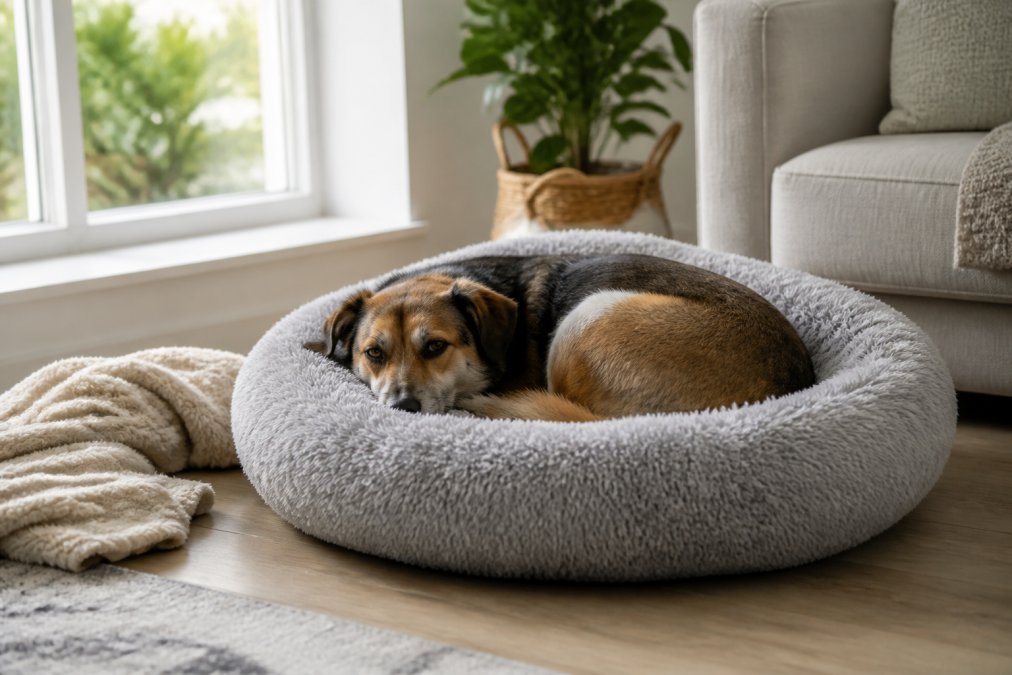
Calming Round Plush Pet Bed Cushion
Our top pick for most rescue dogs. The donut-style rim gives nervous pups something to lean against, and the plush filling relieves pressure on joints and muscles. Sizes run S through L, so a small terrier and a 5 kg lab mix can both find a fit.
Machine Washable Calming Plush Pet Bed Cushion
Rescue dogs shed, drool, and occasionally have accidents. This bed solves that with a removable cover that goes straight into the washing machine, and the non-slip base keeps it steady on tile or hardwood. Available in S (35 cm), M (40 cm), and L (45 cm).
Best for adopters who want low-maintenance cleanup without sacrificing the calming shape. Check Out.

Non-Slip Round Plush Pet Bed Cushion
The most affordable option on our list, and the one we recommend for slippery floors. The non-slip base stays put when a dog scrambles in and out, which matters for older rescues with weak hips. Five sizes from 40cm to 80cm, in colors including dark gray, light gray, leather pink, khaki, Green.

Round Cotton Pet Winter Sleeping Bed
For large breeds and seniors with joint pain, this is the pick.
Soft Thick Plush Round Pet Bed Cushion
Pro Tip
Place the bed in a corner or against a wall rather than the middle of a room. Rescue dogs settle faster when they can watch the doorway from a protected position, and the wall acts as a second "rim" that reinforces the sense of security.
How to Help a Rescue Dog Adjust to a New Home
A few practical steps that make the transition smoother:
Pairing the Bed With Positive Reinforcement Training
A Simple First-Week Schedule
Watch Out
Never punish growling, hiding, or freezing in a new rescue. These are fear responses, not aggression, and correcting them teaches the dog that its warnings don't work, which can escalate to snapping. Redirect with treats and give the dog space instead.
Pro Tip
If your rescue came from a foster home, ask the foster what bed or blanket the dog used there. Familiar scent is one of the fastest calming triggers, and placing a worn item from the foster in the new bed can cut settling time noticeably.
How to Clean a Calming Dog Bed
Key Takeaway
A washable cover is not a nice-to-have. It's the single feature that determines whether a calming bed stays usable for years or gets thrown out after a few accidents.
Choosing the Right Size and Features for Your Rescue Dog
| Feature | Why It Matters | What to Look For |
|---|---|---|
| Raised rim | Supports nesting and security | 10-15 cm height for most dogs |
| Fill | Pressure relief for joints | High-loft fiber or PP cotton |
| Cover | Hygiene and allergies | Removable, machine washable |
| Base | Stays put on smooth floors | Non-slip backing |
| Material | Durability and comfort | Faux fur, plush, or cotton |
Conclusion
Frequently Asked Questions
What is the best bed for calming a dog with anxiety?
A round, bolstered bed with high-loft fiber and a non-slip base works well because it supports nesting behavior and gives a nervous dog a sense of security. Look for machine-washable covers and size-appropriate dimensions so your dog can curl up fully. The Calming Round Plush Pet Bed Cushion from SnugglePawsPetSupplies starts at $34.52 and comes in sizes for dogs up to 22.5 kg.
Do anti-anxiety dog beds really work?
They can help reduce mild anxiety by providing a consistent, enclosed space that supports self-soothing. Calming beds are not a cure for severe separation anxiety, but they work best alongside behavioral modification and positive reinforcement.
How do I choose the right size calming bed for my rescue dog?
Measure your dog from nose to tail and add 15-20 cm so they can stretch out or curl up without feeling cramped. Weight guides help: beds for dogs up to 5 kg often have a 50 cm diameter, while dogs up to 22.5 kg need an 80 cm bed. If your rescue is a large breed, check the weight range on each product, like the Round Cotton Pet Winter Sleeping Bed that fits dogs up to 50 kg.
How do I clean a calming dog bed?
Most calming beds have removable covers that are machine washable. Use a gentle cycle with cold water and pet-safe detergent, then air dry or tumble dry on low. For beds without removable covers, spot clean with a damp cloth and mild soap. Regular washing removes dander and odors, which helps reduce anxiety triggers for rescue dogs still adjusting to a new home.
What features should I look for in a bed for a nervous rescue dog?
Prioritize a raised rim for head and neck support, a non-slip base to prevent sliding on hard floors, and machine-washable fabric for easy hygiene. Orthopedic support with pressure-relief foam helps older dogs with joint pain. A removable cover and durable stitching are also important for long-term use.

