

Cart
0

Table of Contents
- Why Ergonomic Elevated Dog Feeders Matter for Your Pet's Health
- How Elevated Feeders Improve Posture and Reduce Neck Strain
- Benefits of Raised Dog Bowls for Senior Dogs
- How to Choose the Right Height for Elevated Dog Bowls
- Best Non-Slip Feeding Bowls for Dogs: Material and Stability
- Top Elevated Dog Feeders from Our Collection
- Frequently Asked Questions
Last Updated: September 23, 2026
Why Ergonomic Elevated Dog Feeders Matter for Your Pet's Health
Elevated dog feeders are more than a convenience, they address fundamental biomechanical challenges that affect your dog's long-term health. When dogs eat from bowls on the floor, they force their necks into an unnatural downward angle, straining the cervical spine and surrounding muscles with every meal. Over time, this repetitive stress contributes to joint inflammation, digestive inefficiency, and accelerated wear on the musculoskeletal system.
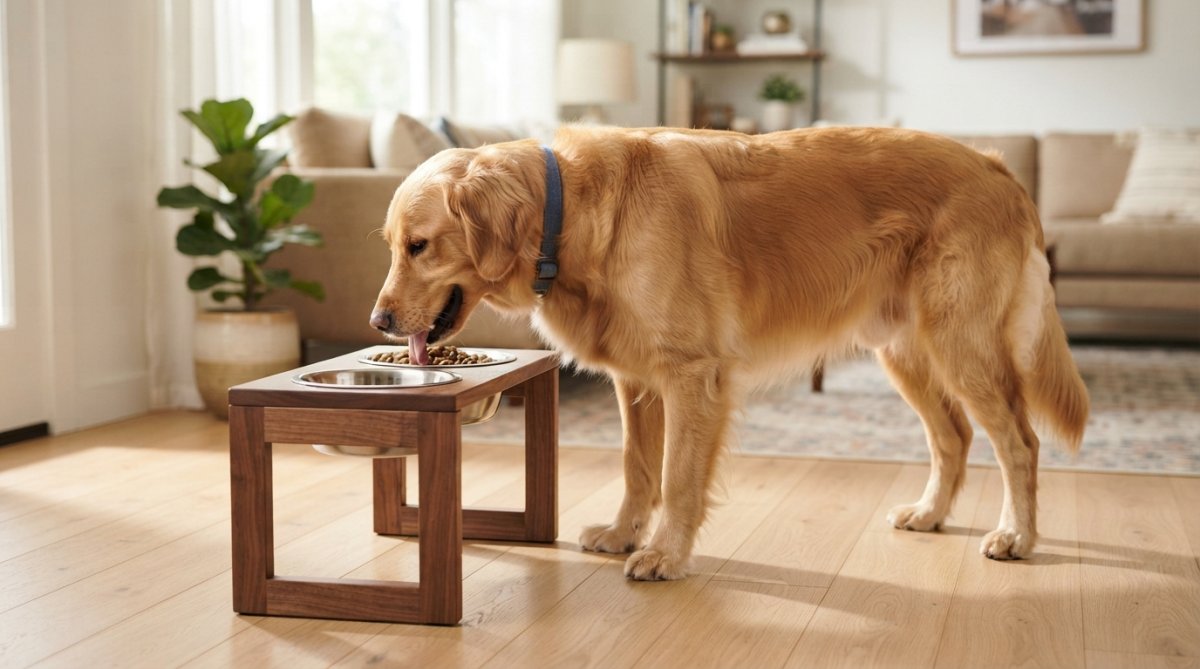
The benefits extend beyond posture correction. Raised bowls reduce the physical effort required to reach food and water, which proves especially critical for senior dogs, large breeds, and dogs with existing joint conditions. By elevating the feeding surface to match your dog's natural standing position, you're aligning the bowl with the dog's shoulders and neck rather than forcing the head downward.
Pro Tip
The ideal feeding height places the bowl at approximately the same level as your dog's chest when standing naturally. This alignment prevents unnecessary strain on the cervical spine and promotes healthy swallowing mechanics.
How Elevated Feeders Improve Posture and Reduce Neck Strain
Proper feeding height directly influences cervical alignment and reduces chronic neck tension. When a dog eats from a floor-level bowl, the cervical vertebrae compress and the neck muscles work against gravity, a small but cumulative strain repeated twice daily. Elevated feeders eliminate this downward reach, allowing the dog's head and neck to remain in a neutral, aligned position during meals.
This postural improvement matters more for certain dogs. Large breeds and giant breeds experience disproportionate stress on their skeletal systems due to body weight. A 90-pound dog eating from the floor experiences significantly more cervical strain than a 20-pound dog in the same position. The Pet Adjustable Height Stainless Feeding Bowl Stand from SnugglePawsPetSupplies addresses this directly with three adjustable heights: 2.5 inches, 7.8 inches, and 10.2 inches. This allows you to select an elevation for your dog based on breed size and body structure.

The mechanics are straightforward: when the bowl sits at chest height, the dog's front legs remain vertical, the spine stays neutral, and the neck muscles relax. This natural alignment reduces inflammation in the cervical region and prevents the progressive joint degradation that comes from years of compensatory posture.
Key Takeaway
Elevated feeding directly reduces neck and cervical strain by maintaining the dog's spine in a neutral position during meals, eliminating the downward reach that causes chronic tension.
Benefits of Raised Dog Bowls for Senior Dogs
Senior dogs experience accelerated joint degeneration and reduced flexibility, making floor-level feeding increasingly uncomfortable. Arthritis, bone density loss, and muscle atrophy are common in aging dogs, and every physical demand, including bending to eat, contributes to pain and mobility decline. Raised bowls remove this unnecessary strain, allowing senior dogs to eat without exacerbating existing joint inflammation.
The digestive benefits are equally important for older dogs. Senior dogs often experience slower gastric motility and reduced swallowing efficiency (pubmed.ncbi.nlm.nih.gov). Elevated feeding improves the swallowing reflex by allowing food to travel downward naturally rather than requiring the dog to lift its head after each bite. This smoother digestive process reduces the risk of regurgitation and improves nutrient absorption, particularly valuable for senior dogs that may already struggle with nutritional uptake.
Many senior dogs also benefit from the reduced physical demand on their rear legs and lower back. Standing to eat from a floor bowl requires sustained weight-bearing on arthritic joints. An elevated feeder minimizes this demand, allowing senior dogs to eat comfortably while standing naturally or even while partially sitting.
How to Choose the Right Height for Elevated Dog Bowls
Feeding height selection depends on three primary factors: breed size, individual dog height, and any existing joint or structural conditions. The general rule is straightforward, the bowl should sit at approximately chest height when your dog stands naturally, with front legs vertical and posture relaxed.
For small dogs (under 25 pounds), a 4- to 6-inch elevation typically works well. Medium dogs (25-60 pounds) generally benefit from 6- to 8-inch heights. Large and giant breeds (over 60 pounds) often require 8- to 12-inch elevations. However, individual variation matters: a tall, long-legged dog may need more height than a stockier dog of the same weight.
The Pet Adjustable Height Stainless Feeding Bowl Stand offers flexibility across multiple sizes with its three adjustable positions. This adaptability proves valuable as puppies grow or if you have multiple dogs of different sizes sharing a feeding area. Rather than purchasing separate feeders, adjustable stands allow you to modify height as your dog develops or as aging changes their optimal feeding posture.

| Breed Size | Typical Weight | Recommended Height | Best For |
|---|---|---|---|
| Small | Under 25 lbs | 4-6 inches | Chihuahuas, Toy breeds |
| Medium | 25-60 lbs | 6-8 inches | Beagles, Cocker Spaniels |
| Large | 60-100 lbs | 8-10 inches | Labs, Golden Retrievers |
| Giant | Over 100 lbs | 10-12 inches | Great Danes, St. Bernards |
Dogs with arthritis, hip dysplasia, or other joint conditions may benefit from slightly higher elevations to further reduce strain. If your dog has been diagnosed with a musculoskeletal condition, consulting with your veterinarian about optimal feeding height ensures you're supporting their specific needs.
Watch Out
Feeding height that's too high can strain the shoulders and neck in the opposite direction. If your dog appears to be stretching upward or standing on tiptoes to eat, lower the bowl slightly until the natural standing posture is achieved.
Best Non-Slip Feeding Bowls for Dogs: Material and Stability
Bowl material and base stability are equally important as height. A bowl that shifts or tips during feeding undermines the postural benefits of elevation and creates stress and unpredictability for your dog. Non-slip bases prevent movement, allowing your dog to focus on eating rather than managing an unstable surface.
Pet Elevated Feeding Bowl Neck →
Stainless steel bowls remain the gold standard for durability, hygiene, and safety. Stainless steel resists bacterial growth, doesn't retain odors, and withstands years of daily use without degradation. The Pet Anti Slip Feeding Bowl With Stand pairs ceramic bowls with a sturdy iron stand and includes a tilted 15-degree design. The non-slip base keeps everything stable. This combination of materials, ceramic for the bowl surface and metal for structural support, delivers both comfort and reliability.
Ceramic bowls offer aesthetic appeal and smooth surfaces that reduce food residue buildup. The Pet Wooden Rack Ceramic Feeding Bowl Stand and Pet Solid Wood Ceramic Feeding Bowl Stand use ceramic bowls paired with wooden frames, creating feeders that complement home decor while maintaining functional stability. Wooden frames, particularly those made from imported hardwoods like Beech or North American Black Walnut, provide weight and stability that prevents tipping.
For budget-conscious pet owners, the Nordic Pet Feeding Bowl With Stand uses food-grade PET material with a triangular support base designed to prevent overturning. The 15-degree tilt design protects the cervical spine while the sturdy base ensures stability during meals. At $12.87, this option delivers core functionality without premium pricing.
Bamboo and wood stands offer both stability and natural aesthetics. The Adjustable Tilted Pet Feeding Bowl Stand features bamboo and wood construction, providing a designer-style appearance while maintaining the structural integrity needed for reliable, non-slip feeding.

The critical factor across all materials is a non-slip base.
Top Elevated Dog Feeders from Our Collection
SnugglePawsPetSupplies offers a curated selection of elevated feeders designed to support your dog's health while fitting different budgets and aesthetic preferences.
Best Budget Option: Nordic Pet Feeding Bowl With Stand
Best for Aesthetics: Adjustable Tilted Pet Feeding Bowl Stand
Premium Option: Pet Solid Wood Ceramic Feeding Bowl Stand
Best For
SnugglePawsPetSupplies elevated feeders work best for pet owners prioritizing their dogs' musculoskeletal health, senior dog owners managing joint conditions, and large breed owners addressing cervical strain. The range of options, from budget-friendly to premium, ensures every household can find a feeder matching both their dog's needs and their budget.
| Feeder | Price | Best For | Key Feature | Material |
|---|---|---|---|---|
| Pet Adjustable Height Stainless | $97.38 | Multi-size households, growing puppies | Three adjustable heights | Stainless steel, plastic stand |
| Nordic Pet Feeding Bowl | $12.87 | Budget-conscious owners, small dogs | Durable food-grade material | PET, triangular base |
| Adjustable Tilted Pet Stand | $28.94 | Aesthetic-focused owners | Designer bamboo/wood | Bamboo and wood |
| Pet Anti Slip Feeding Bowl | $25.80 | Senior dogs, digestive support | 15-degree tilt, non-slip | Ceramic, iron stand |
| Pet Solid Wood Ceramic Stand | $75.28 | Premium home integration | Hardwood construction | Imported hardwood, ceramic |
Frequently Asked Questions
Do veterinarians recommend elevated dog bowls?
Many veterinarians support elevated feeders for specific situations. Dogs with megaesophagus, arthritis, or joint issues benefit from reduced strain on the cervical spine and improved swallowing mechanics. Elevated feeders promote natural standing position and better digestive efficiency. However, veterinary consensus suggests elevated feeders are most beneficial for senior dogs, large breeds, and dogs with diagnosed health conditions rather than universally recommended for all dogs.
Can elevated dog feeders help prevent bloat in dogs?
The relationship between elevated feeders and bloat (gastric dilatation-volvulus) is debated. Some studies suggest that feeding at an elevated height may reduce bloat risk by improving swallowing reflex and food movement, while others indicate the benefit is minimal. Elevated feeders are not a guaranteed bloat prevention method. Focus instead on feeding smaller, frequent meals, avoiding vigorous exercise after eating, and monitoring large breed dogs closely for bloat symptoms.
How do I determine the correct height for an elevated dog bowl?
The ideal height allows your dog's elbows to bend at approximately 15-20 degrees when eating. Measure from the ground to your dog's elbow joint, then set the bowl height slightly below that point. For puppies, start lower and adjust as they grow. The Pet Adjustable Height Stainless Feeding Bowl Stand offers three height settings (2.5 inches, 7.8 inches, and 10.2 inches) to accommodate dogs of various sizes.
Are elevated feeders better for senior dogs with arthritis?
Yes, elevated feeders significantly reduce musculoskeletal strain on senior dogs with arthritis. By eliminating the need to bend low, elevated bowls decrease stress on joints, reduce inflammation in the neck and shoulders, and improve overall comfort during meals. Senior dogs benefit from the ergonomic design that supports natural standing position and reduces repetitive bending. Many older dogs show improved appetite and eating behavior when fed from elevated stations designed for their specific height and mobility needs.

