

Cart
0

Table of Contents
- Understanding Your Dog's Chewing Habits and Sleep Needs
- Chew Proof Dog Bed Materials That Actually Hold Up
- Reinforced Construction: What Makes a Bed Truly Durable
- How to Stop a Dog From Destroying Their Bed
- Washable Heavy Duty Dog Bed Covers and Liners
- Measuring and Selecting the Right Size for Your Dog
- Maintenance and Care to Extend Your Dog Bed's Life
- Conclusion
- Frequently Asked Questions
Last Updated: September 20, 2026
Understanding Your Dog's Chewing Habits and Sleep Needs
A dog's chewing behavior and sleep patterns determine which durable dog beds will survive in your home. Heavy chewers, anxious dogs, and large breeds require different durability levels. Observe whether your dog is a destructive chewer, casual nibbler, or digger before selecting a bed.
Sleep position matters too. Dogs that curl need different support than those who stretch flat, and senior dogs require orthopedic support for joint pain. Understanding these habits prevents buying a bed your dog will demolish within weeks.
Pro Tip
Watch your dog for a full week before purchasing. Note whether they chew the edges, dig at corners, or simply rest quietly. This behavior pattern predicts which construction style will hold up longest.
Chew Proof Dog Bed Materials That Actually Hold Up
The best durable dog beds use ballistic-grade nylon and rip-stop fabric, which withstand sustained chewing pressure that destroys ordinary upholstery.
Ballistic-grade nylon features a tight weave that resists puncturing from sharp teeth, while rip-stop fabric incorporates reinforced threads that prevent tears from spreading. These materials cost more than standard polyester but last years longer with heavy chewers.
Non-toxic materials matter equally since your dog spends 8-14 hours daily on their bed. Look for beds with hypoallergenic fillings and safe dyes that won't trigger skin reactions if ingested in small amounts.
Waterproof liners prevent urine and moisture from penetrating the foam core, extending the bed's life by preventing mold, odor, and structural breakdown.
Reinforced Construction: What Makes a Bed Truly Durable
Triple-stitched seams are essential for durable dog beds. Single or double stitching fails under sustained chewing pressure within weeks, while triple-stitched seams distribute stress across multiple thread lines.
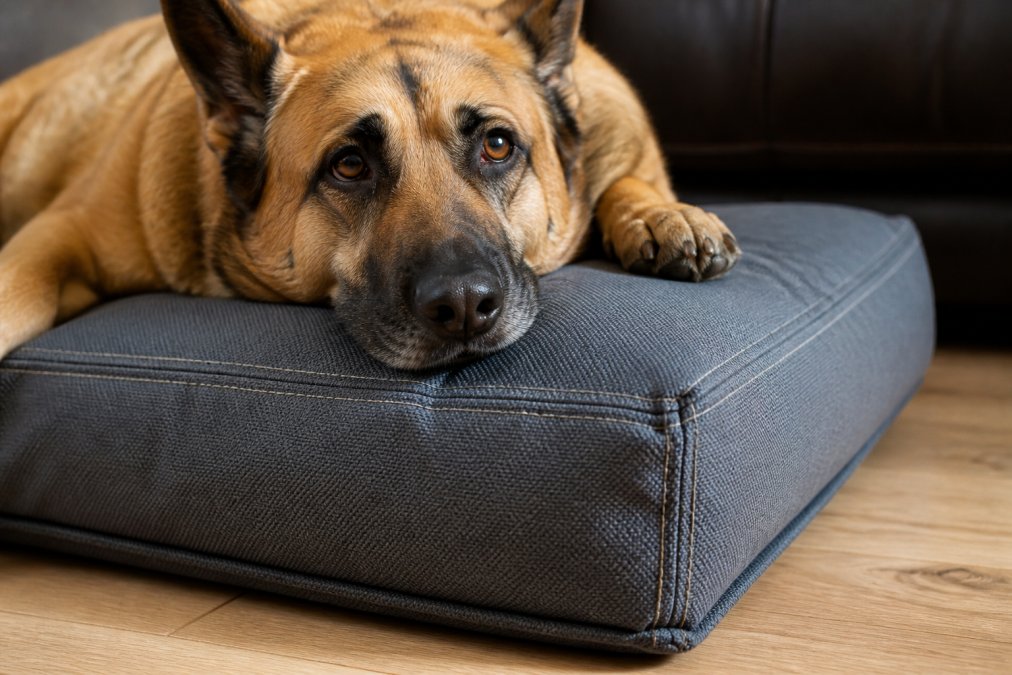
Elevated cot designs with aircraft-grade aluminum frames keep beds off the ground, reducing moisture and pest contact while improving airflow. This style works especially well for dogs prone to digging.
Reinforced construction includes corner reinforcement and edge binding, since corners take the most abuse from chewing and digging.
Denier rating indicates thread thickness and durability. For heavy chewers, seek beds with 800+ denier nylon that can withstand sharp teeth.
How to Stop a Dog From Destroying Their Bed
Destructive chewing often signals anxiety, boredom, teething, or medical issues rather than bed quality problems. Identifying the root cause is essential because each requires different intervention.
Teething Destruction (Puppies 3-7 Months Old)
Puppies destroy beds during teething because chewing relieves sore gums. Offer frozen rubber toys or textured toys that massage emerging teeth, rotating every 2-3 days. Provide an inexpensive bed during this temporary phase. Most puppies transition out of destructive teething by 7 months.
Anxiety-Driven Destruction (All Ages)
Dogs with separation anxiety destroy beds as a stress response, often escalating from one corner to the entire bed within weeks. Anxiety-driven destruction requires behavioral intervention alongside a durable bed.
Gradual desensitization works best: start with 30-second absences and extend by 30 seconds every few days, rewarding calm behavior. This 4-8 week process rewires the dog's response to alone time. Simultaneously, use pheromone diffusers (Adaptil) or consult a veterinary behaviorist about anti-anxiety medication for severe cases.
Boredom-Driven Destruction (High-Energy Dogs)
Dogs with insufficient mental or physical stimulation destroy beds from boredom. These dogs need 60-120 minutes of daily exercise depending on breed and age, a 30-minute walk is insufficient for herding breeds, sporting breeds, or young dogs.
Provide puzzle toys, sniff mats, and food-dispensing toys, rotating every 2-3 days. A Kong stuffed with peanut butter can occupy a dog for 30-45 minutes. Scent work games reduce destructive behavior more effectively than physical exercise alone.
Digging and Nesting Behavior
Some dogs dig at and shred beds as nesting behavior, an instinctive rather than anxious response. Elevated cot-style beds with aluminum frames prevent access to the underside, or provide a designated digging box where the dog can express this instinct safely.
Medical Causes
Persistent bed destruction can signal medical issues like skin allergies, gastrointestinal discomfort, or arthritis pain. A dog that suddenly begins destroying a bed may be experiencing pain. Schedule a veterinary exam to rule out medical causes.
Monitoring Progress
Track destructive behavior weekly and document triggers (alone time, specific times, family members) to refine intervention. Most behavioral interventions show improvement within 2-3 weeks if the root cause is correctly identified.
Watch Out
Never punish a dog for destroying their bed. Punishment increases anxiety and often worsens destructive behavior. Instead, remove temptation, address the underlying cause, and reward calm behavior on the bed with treats and praise.
Washable Heavy Duty Dog Bed Covers and Liners
Removable, washable covers extend a bed's life by protecting the core from dirt, oils, and accidents. Look for covers with double zippers and machine-washable fabric that resists shrinking and fading.
Waterproof liners underneath the cover prevent liquids from reaching the foam core, allowing you to wash the cover without waiting for the core to dry.
Moisture-wicking fabrics on top keep dogs comfortable while waterproof layers below block moisture penetration, preventing damp, musty smells.
Verify covers fit the bed's dimensions properly. Oversized covers bunch and create uncomfortable ridges, while undersized covers pull off during use.
SnugglePawsPetSupplies offers durable beds with removable, washable covers. The quality promise backing these products ensures covers maintain their integrity through regular cleaning cycles.
Measuring and Selecting the Right Size for Your Dog
An undersized bed strains joints and prevents proper rest, while an oversized bed wastes space and may cause rolling and falling.
Measure your dog in their natural sleeping position. If they curl, measure nose to tail and add 6 inches. If they stretch flat, measure full length and width with legs extended, adding 4 inches for movement.
Weight capacity matters significantly for large breeds. Always select a bed with capacity 10-15 pounds above your dog's current weight to account for future growth.
Consider your dog's age and mobility. Senior dogs with arthritis need deeper cushioning and orthopedic support. Puppies need room to grow to prevent replacement as they mature.
Maintenance and Care to Extend Your Dog Bed's Life
Regular maintenance and simple repairs extend a bed's life by years. Most owners discard beds with small tears or loose seams, unaware that repairs can restore full functionality.
Routine Cleaning and Inspection
Vacuum weekly to remove dirt and prevent moisture buildup. Use a hand vacuum on delicate fabrics. Inspect seams, zippers, and edges monthly for early signs of wear to prevent small problems from becoming catastrophic.
Spot clean stains immediately by blotting with a clean cloth. Use mild soap and water, avoiding harsh chemicals that degrade fabric or waterproof coatings.
Machine wash removable covers monthly using warm water and gentle detergent. Avoid bleach and fabric softeners. Air dry completely before reinstalling.
Rotate the bed's position every few weeks to distribute wear evenly and extend usable life by 20-30 percent.
Repairing Seam Separation
Loose seams are the most common failure point. A 2-3 inch separation can be hand-stitched with heavy-duty thread using a ladder stitch every ¼ inch. This 15-20 minute repair costs under $2.
For larger separations (over 6 inches), use a sewing machine with heavy-duty needle and upholstery thread, overlapping the separated area by ½ inch on each side. A tailor can repair seams for $15-$40, far less than replacing a $100+ bed.
Patching Tears and Punctures
Small tears (under 2 inches) in ballistic-grade nylon or rip-stop fabric can be patched using adhesive fabric patches or sewing.
Addressing Zipper Failures
Waterproof Liner Maintenance
Cost-Benefit Analysis of Repair vs. Replacement
Key Takeaway
The most durable dog beds require consistent maintenance and timely repairs. A high-quality bed neglected will fail faster than a mid-range bed properly cared for. Budget 30 minutes monthly for cleaning and inspection, and address small damage immediately before it spreads. Many beds can be extended 2-3 years beyond their expected lifespan through simple repairs.
Conclusion
Choosing durable dog beds means understanding your dog's specific chewing habits, sleep position, and age-related support needs. Materials like ballistic-grade nylon and rip-stop fabric, combined with triple-stitched reinforced construction, create beds that survive heavy chewing and daily wear.
| Material | Durability Level | Best For | Maintenance |
|---|---|---|---|
| Ballistic-grade nylon | Highest | Heavy chewers | Monthly vacuuming, spot clean |
| Rip-stop fabric | High | Moderate chewers | Regular vacuuming, washable cover |
| Standard polyester | Medium | Light chewers | Frequent cleaning needed |
| Elevated aluminum frame | High | Diggers, outdoor use | Frame inspection, cover washing |
Frequently Asked Questions
What is the toughest material for durable dog beds?
Ballistic-grade nylon and rip-stop fabric are among the toughest materials available. Ballistic nylon resists punctures and tears from heavy chewers, while rip-stop fabric prevents small tears from spreading. Look for fabrics with a denier rating of 1000 or higher, higher denier indicates greater thickness and durability. Canvas and reinforced polyester blends also perform well for dogs that dig or chew moderately.
How do I know if a dog bed is truly chew-proof?
Check for triple-stitched seams, reinforced stress points at corners, and ballistic-grade or rip-stop materials. Manufacturers should specify denier ratings and fabric composition. Read customer reviews from owners of heavy chewers, not just casual users. True chew-proof beds have seams that won't unravel when punctured, and fabrics that resist tearing even under sustained pressure. Be cautious of marketing claims without material specifications.
How can I maintain a durable dog bed to make it last longer?
Wash the cover regularly according to manufacturer instructions. Inspect seams and fabric weekly for small tears and repair them immediately before they spread. Vacuum the bed to remove dirt and debris that can weaken fibers. Store the bed in a dry location away from direct sunlight, which degrades fabric over time. Rotate the bed occasionally to distribute wear evenly.
Are orthopedic dog beds more durable than standard beds?
Durability and orthopedic support are separate qualities. An orthopedic bed provides joint support through high-density cushioning, but that doesn't guarantee the cover resists chewing or tearing. Look for orthopedic beds with reinforced, heavy-duty covers and triple-stitched construction if your dog is a chewer. The best choice combines both features: durable materials protecting a supportive core. Check the cover material and seam quality independently of the cushion type.
Investing in a durable dog bed that matches your dog's behavior and size prevents the frustration of repeated replacements. Check out SnugglePawsPetSupplies's selection of heavy-duty beds with reinforced construction and washable covers, each backed by our quality promise and hassle-free returns, so you can rest assured your dog will have a comfortable, long-lasting place to sleep.

