

Cart
0

Table of Contents
- Step 1: Set Up a Calm Grooming Space for a Large Breed Dog
- Step 2: Gather the Right Large Dog Grooming Tools
- Step 3: Brush and Comb by Coat Type to Prevent Mats
- Step 4: How to Bathe a Large Dog at Home Without a Grooming Tub
- Step 5: How to Trim Large Dog Nails at Home Safely
- Step 6: Ear Cleaning, Face Care, and Teeth Brushing
- Step 7: Build a Large Dog Grooming Schedule That Fits Real Life
- When to Stop and Call a Professional or Your Vet
- Frequently Asked Questions
Last Updated: October 18, 2026
Step 1: Set Up a Calm Grooming Space for a Large Breed Dog
Learning how to groom large breed dogs at home starts with the room, not the brush, and the same holds when you groom large breed dogs every few weeks.
Most grooming failures trace back to a bad environment. Slick floors make big dogs panic. Poor light hides mats until they tighten. A common mistake is grooming on a raised table with no restraint training, which risks a fall from height.
Build a Large-Dog Grooming Station That Protects Your Back
The setup for a 90-pound dog is different from the setup for a 15-pound dog. You are not lifting the dog, so the station has to bring the work to your hands.
Standing zone. Use a rubber anti-fatigue mat or a damp towel over hard flooring.
Bathing zone. A walk-in shower is the safest option for a large dog.
Drying zone. Pick a warm, draft-free room with enough floor space for the dog to shake out.
Position the Dog So You Can Reach Without Straining
Large-dog handling is mostly about where you stand. Work from the side, not the front, so the dog doesn't feel cornered.
If the dog won't hold still, use a leash tethered to a sturdy fixed point at floor level, not a door handle.
- Pick a quiet room with a door you can close.
- Lay a rubber mat or a damp towel over hard flooring for grip.
- Add a second non-slip mat where the dog stands.
Give the dog a few minutes to sniff the space. Then reward calm behavior with a treat.
Pro Tip
Do a two-minute handling check before the first full session. Touch each paw, lift each ear flap, and run a hand along the spine. If any spot makes the dog pull away, note it and work on that spot in short, rewarded sessions before you attempt a full groom.
Step 2: Gather the Right Large Dog Grooming Tools
The right large dog grooming tools match the coat, not the breed label. A short-coated mastiff and a double-coated husky need different gear. Gather everything before the dog enters the room so you never leave mid-session.
A practical kit includes:
- A slicker brush for loosening surface tangles
- An undercoat rake for double coats and heavy shedding
- A metal comb to check for hidden mats down to the skin
The Alloy Steel Pet Grooming and Detangling Comb reaches through dense fur to find tangles a brush glides over. For everyday upkeep, the Pet Grooming Brush for Loose Hair Removal handles shedding and light detangling in one pass.


Pro Tip
Do a two-minute comb check before every full session. Run the comb against the coat direction on the hindquarters and behind the ears. If it snags, deal with that spot first.
Step 3: Brush and Comb by Coat Type to Prevent Mats
Brushing works best when you match technique to coat type. Short coats need weekly slicker passes. Long-haired coats and double coats need layered brushing down to the skin, not just across the top.
Handling a Double Coat and Heavy Shedding
Double coats have a soft undercoat beneath a weather-resistant topcoat. Never shave a double coat to reduce shedding. It can grow back unevenly and reduces the coat's natural insulation.
Work in sections:
- Brush with the grain using a slicker brush.
- Switch to an undercoat rake and pull gently outward, away from the skin.
- Comb each section to confirm no mats remain.
- Repeat weekly, and daily during seasonal shedding.
Step-by-Step Dematting and Undercoat Removal
Small mats loosen with patience. Hold the mat at its base, close to the skin, so pulling doesn't tug the skin itself. Work the comb through the outer edge first, then move inward in small passes.
- Never cut a mat with scissors. Skin hides inside mats and cuts are common.
- Split a large mat into smaller ones before combing.
- Stop if the skin looks red or the dog flinches repeatedly.
Watch Out
Trying to rip through a tight mat in one pass is the fastest way to teach a dog to hate grooming. It also causes brush burn, a raw patch where repeated friction damages skin.
Step 4: How to Bathe a Large Dog at Home Without a Grooming Tub
Bathing a large dog at home works fine in a walk-in shower or with a bucket and hose outdoors. Skip the bathtub unless the dog can step in safely. Lifting a big dog into a tub is a back injury waiting to happen.
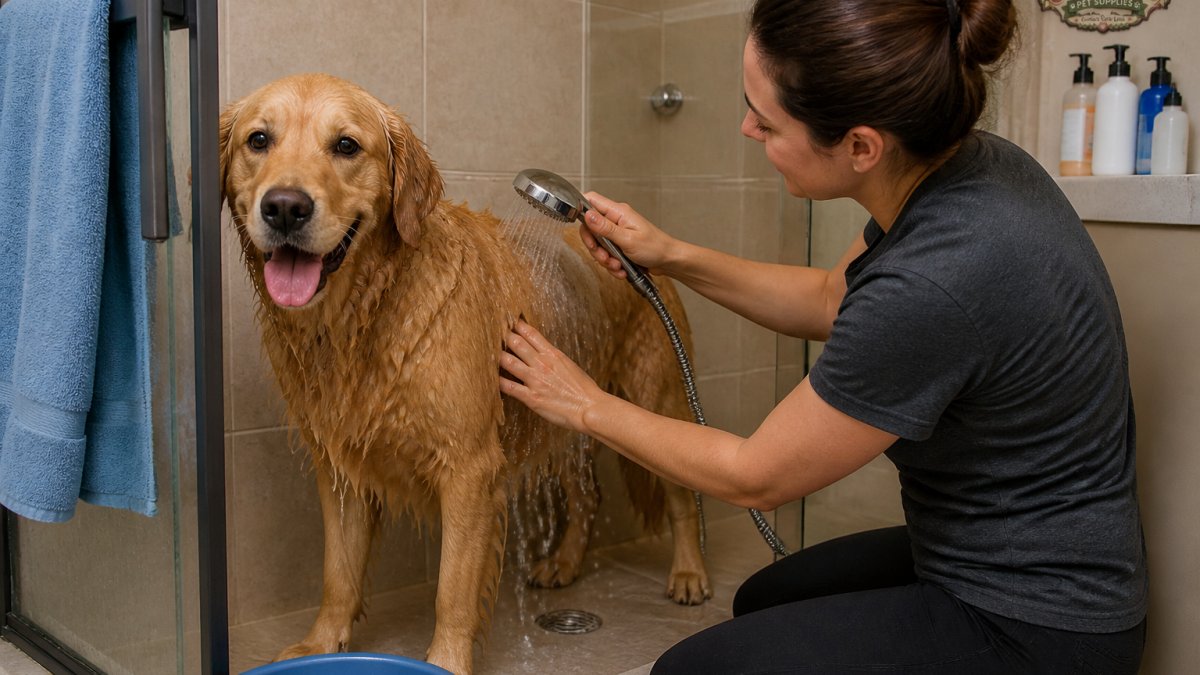
Follow this order:
Alloy Steel Pet Grooming And Detangling Comb →
- Brush out all mats first. Water tightens them.
- Wet the coat thoroughly, working down to the skin.
- Apply dog shampoo and massage it in, avoiding the eyes and ears.
- Rinse longer than feels necessary, then rinse again.
Rinsing and Drying a Thick Coat Completely
Leftover shampoo causes itching and dull coat. Rinse in sections until the water runs clear.
The Quick Drying Microfiber Pet Absorbent Bath Towel has hand pockets that make it easier to control a big, wet dog while drying.

Air drying a thick coat in cool weather risks chilling. Towel dry, then keep the dog in a warm room until fully dry.
Step 5: How to Trim Large Dog Nails at Home Safely
Trimming large dog nails at home is safe when you take small cuts and know where the quick sits. The quick is the blood supply inside the nail.
Hold one paw firmly but gently. Clip at a slight angle, removing thin slices from the tip. Check the cut face after each slice. A dark center means you're close to the quick.
- Trim every 3-4 weeks to keep nails short.
- Walk on hard surfaces to wear nails down naturally.
- Reward after each paw, not just at the end.
- Keep styptic powder nearby for small nicks.
Pro Tip
If the dog pulls a paw away, stop and reset. Forcing the paw back teaches resistance. A short break with a treat usually resets the whole session.
Step 6: Ear Cleaning, Face Care, and Teeth Brushing
Ear cleaning, face care, and teeth brushing finish the routine and protect long-term health. Check ears weekly. Wipe the outer ear with a cotton pad and a vet-approved cleaner.
For faces, use a damp cloth around the eyes and muzzle. Wrinkled breeds need daily folds checks. Teeth brushing works best with a soft toothbrush and dog-safe toothpaste, a few times a week.
Step 7: Build a Large Dog Grooming Schedule That Fits Real Life
A large dog grooming schedule should match coat type and season, not a fixed calendar. The bigger the dog, the more time each task takes, so the schedule has to be realistic about session length and about splitting work across days. Use the tables below as a starting point and adjust to your dog's coat and tolerance.
Schedule by Coat Type
| Coat Type | Brushing | Bath | Nail Trim | Ear Check |
|---|---|---|---|---|
| Short, smooth (mastiff, boxer) | Weekly, 10-15 min | Every 8-10 weeks | Every 3-4 weeks | Weekly |
| Double coat (husky, shepherd) | 2-3 times weekly, daily in shedding season | Every 6-8 weeks | Every 3-4 weeks | Weekly |
| Long, silky (golden retriever, setter) | Every other day, 15-20 min | Every 4-6 weeks | Every 3-4 weeks | Weekly |
| Curly or wool (poodle, doodle) | Daily, 10-15 min | Every 4-6 weeks | Every 3-4 weeks | Weekly |
| Dense, wiry (terrier mixes) | 2 times weekly, plus hand-stripping as needed | Every 6-8 weeks | Every 3-4 weeks | Weekly |
Plan Session Length Around the Dog, Not the Clock
A large dog can usually tolerate 15-20 minutes of focused brushing before it gets restless. For a double-coated dog in shedding season, that means two shorter sessions rather than one long one. A common pattern is to brush the front half in the morning and the hindquarters in the evening.
- Full brush-out: 15-20 minutes for most large coats; 25-30 minutes for a dense double coat in season.
- Bath: 30-40 minutes including setup and rinse.
- Nail trim: 10 minutes for all four paws, with breaks between paws.
- Ear check and clean: 2-3 minutes.
Split the Routine Across the Week
Trying to do everything in one session is the fastest way to tire out both you and the dog. A workable weekly pattern for a double-coated large breed looks like this:
- Monday: 10-minute brush-out and ear check.
- Wednesday: 10-minute brush-out and teeth brushing.
- Friday: 15-minute brush-out, focusing on the hindquarters and behind the ears.
- Saturday: bath and full dry, every 6-8 weeks.
Short-coated dogs can stretch brushing to every 10 days. Long-haired and curly-coated dogs need more frequent sessions and a comb check down to the skin. Write the schedule on the fridge and keep tools in one caddy so setup takes seconds.
Key Takeaway
The schedule that works is the one you can repeat. Two 10-minute sessions beat one 30-minute session you keep putting off, especially for a large dog that gets restless on the table.
When to Stop and Call a Professional or Your Vet
Some grooming jobs belong with a professional. Stop and call for help when:
- A mat is tight against the skin and the dog won't tolerate combing
- Skin is red, broken, or has an odor
- Nails are overgrown and curling into the paw pad
- The dog shows pain, limping, or extreme fear
A vet can rule out skin infections or ear issues before grooming continues. Professional groomers handle severe matting safely. Home grooming is a routine, not a rescue mission.
For owners who want durable tools that hold up to a big dog's coat, SnugglePawsPetSupplies stocks grooming combs, brushes, and quick-drying towels backed by a quality promise and easy returns.
Frequently Asked Questions
How often should you groom a large-breed dog?
Most large breeds need brushing two to three times a week, a bath every four to eight weeks, nail trims every three to four weeks, and ear checks once a week. Double-coated breeds shed heavily twice a year and may need daily brushing during those stretches. Build your large dog grooming schedule around coat type and activity level rather than a fixed calendar. Dogs that swim, hike, or spend long hours outdoors usually need more frequent bathing and paw checks.
How do you bathe a large dog without a grooming tub?
Use a walk-in shower or a non-slip mat in the bathtub, and close the bathroom door before you start. Wet the coat from the neck back with a handheld sprayer on low pressure, lather dog shampoo in sections, and rinse until the water runs clear. A quick-drying microfiber towel with hand pockets, like the one at SnugglePawsPetSupplies for $20.20, soaks up far more water than a standard bath towel, which cuts drying time and reduces shaking. Keep the head dry and wipe the face with a damp cloth instead.
How do you brush a large dog with a thick or double coat?
Work in sections and brush down to the skin, not just over the top of the coat. Use a slicker brush to loosen surface tangles, then an undercoat rake or steel comb to pull out dead undercoat. Pay close attention to the armpits, behind the ears, the tail base, and the back of the hind legs, where mats form first. Brush in the direction of hair growth with firm strokes, and stop if the tool snags. Never cut mats out with scissors, since it is easy to catch the skin.
When should you take a large dog to a professional groomer?
Call a groomer or vet when mats are tight against the skin, when your dog yelps or snaps during handling, or when you find redness, sores, discharge, or a bad smell in the ears. Nails that have grown into the paw pads, cracked pads, and any lump or wound also need professional eyes. A groomer can also shave out severe matting safely. For anxious or senior dogs, a vet check before grooming is a sensible first step.
Grooming a large dog at home takes the right room, the right tools, and a schedule you can keep. If a brush or towel keeps slipping, the gear is the problem, not the dog. SnugglePawsPetSupplies offers grooming combs, detangling brushes, and absorbent towels built for big coats, with fast shipping and hassle-free returns. Get started with SnugglePawsPetSupplies and make grooming a calm part of the week.

