

Cart
0
Table of Contents
- Why Pet Owners Switch From The Curated Pet
- Pet-Friendly Furniture Materials That Last
- Luxury Dog Crates That Look Like End Tables
- Modern Pet Decor Ideas for Living Rooms
- Space-Saving and Multi-Functional Pet Furniture
- Durability, Safety, and Long-Term Value
- How to Choose the Right Pet Furniture Alternative
- Frequently Asked Questions
Last Updated: September 28, 2026
Why Pet Owners Switch From The Curated Pet
Pet owners often discover that premium furniture brands don't always deliver on their promises. The Curated Pet alternatives for furniture exist because many pet parents find themselves frustrated with limited customization options, inflexible return policies, or furniture that doesn't match their home's aesthetic. Some customers report that products arrive damaged, take weeks to deliver, or simply don't suit their pets' actual needs.
SnugglePawsPetSupplies recognizes these pain points. Pet owners deserve options that combine durability, style, and genuine pet comfort without the premium price tag or complicated ordering process. The shift toward pet furniture alternatives reflects a broader trend: today's pet owners want pieces that work as hard for their home's design as they do for their pets' well-being.
The reasons people explore alternatives are straightforward. One customer might need rental-friendly furniture that doesn't damage walls or flooring. Another might prioritize allergen-resistant materials for family members with sensitivities. A third might simply want to test multiple styles before committing to a high-end purchase. Whatever the motivation, the market now offers genuine pet furniture alternatives that address real gaps in the mainstream offerings.
Pet-Friendly Furniture Materials That Last
Choosing durable, pet-safe materials is the foundation of any furniture decision. Not all fabrics handle claws, accidents, and daily wear equally. The best pet furniture alternatives use materials specifically selected for their ability to withstand pet life while remaining safe for animals.
Sisal and natural rope represent time-tested choices for scratching posts and climbing structures. These materials satisfy cats' natural instinct to scratch while resisting shredding and deterioration. Sisal is biodegradable and non-toxic, making it a responsible choice for environmentally conscious pet owners.

Corrugated cardboard and recycled paper products offer surprising durability for scratching boards. These materials are surprisingly sturdy when properly constructed, and they're completely safe if ingested in small amounts. Many pets actually prefer the texture and sound of cardboard scratching surfaces. The American Veterinary Medical Association emphasizes the importance of providing appropriate scratching surfaces that match pets' natural behaviors.
Washable fabrics and slip covers make furniture maintenance realistic for busy households. Look for materials labeled as stain-resistant, water-resistant, or machine-washable. Pet-safe upholstery should resist pilling, hold color through repeated washing, and maintain structural integrity after cleaning. Soft velvet fabrics provide comfort while offering reasonable durability.
Wood and MDF density board create the structural foundation for most climbing towers and scratching posts. These materials provide stability without excessive weight, making them suitable for multi-level designs. The key is ensuring finishes are non-toxic and free from harmful chemicals that might affect pets who chew or lick surfaces.
SnugglePawsPetSupplies offers several options that prioritize material safety and longevity. The Pet Product Safety Standards guide what constitutes safe pet furniture, and products meeting these standards typically feature clearly labeled materials and construction methods.
Luxury Dog Crates That Look Like End Tables
The aesthetic integration of pet furniture into home decor has become increasingly important for design-conscious owners. Modern pet furniture alternatives transform functional pieces into stylish home elements that don't scream "pet supplies."
Crate furniture that doubles as end tables or side tables solves a real space problem. These pieces typically feature wood or MDF construction with decorative finishes that match contemporary interior design. The crate portion remains fully functional for training and safe spaces, while the exterior presents as legitimate furniture.
When evaluating crate alternatives, consider the dimensions relative to your pet's size. A piece that looks like an end table but only fits a toy breed won't work for larger dogs. The best options offer multiple size options to accommodate different breeds.
Modular designs provide flexibility for changing needs. Some owners need a crate for a growing puppy that transitions to a larger dog. Others want pieces that adapt as their pet ages or their living situation changes. Customizable configurations let pet owners adjust shelving, compartments, or height without replacing the entire unit.
Finishing touches matter for aesthetic integration. Wood stain colors, hardware choices, and decorative elements should coordinate with existing bedroom, living room, or entryway furniture. The goal is creating a space where the pet furniture enhances rather than competes with the home's design scheme.
Modern Pet Decor Ideas for Living Rooms
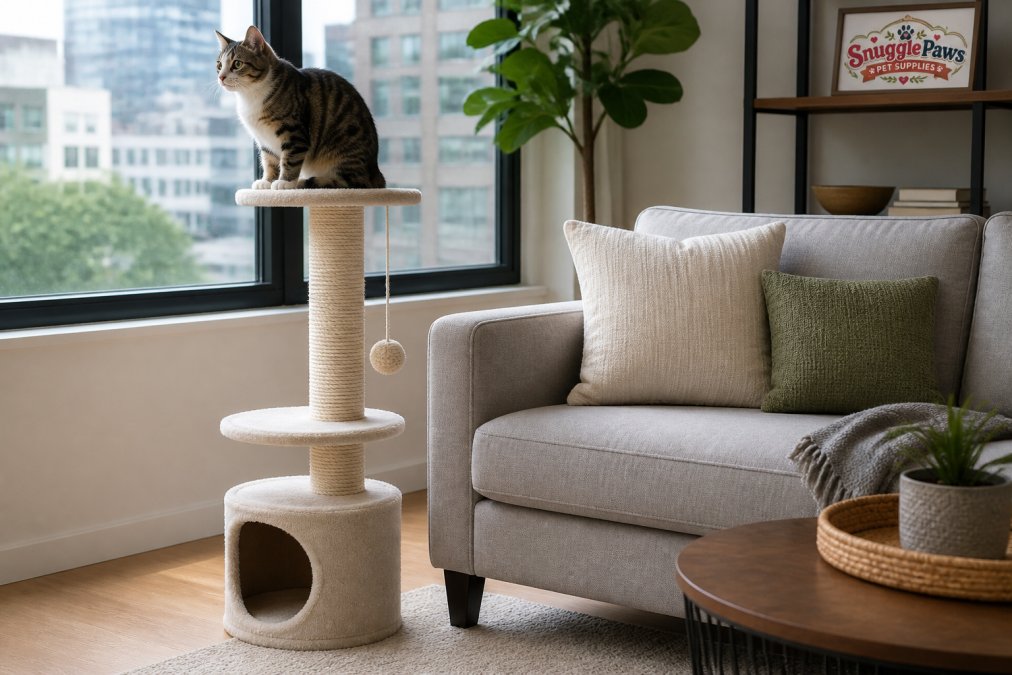
Integrating pet furniture into living room design requires thinking about sight lines, traffic flow, and visual balance. Modern pet decor isn't about hiding pet items, it's about making them part of the intentional design.
Vertical scratching posts and climbing towers work well in corners or against accent walls. Rather than tucking them away, positioning them as design features creates visual interest. A tall tower with interesting geometric shapes or natural wood finishes can anchor a corner the way a floor lamp or plant stand might.
Color coordination transforms pet furniture from functional necessity to design element. Natural wood tones complement virtually any palette. Pieces with fabric elements should echo colors already present in the room, throw pillows, area rugs, or wall art. This approach makes pet furniture feel intentional rather than afterthought.
53CM Pet Scratching Post Climbing Tower →
Scale matters significantly. A scratching post that overwhelms a small living room creates visual clutter. Conversely, a tiny piece in a spacious room looks inadequate. The furniture should be proportional to the room's dimensions and other furnishings.
Layering textures through pet furniture adds depth to modern spaces. A sisal-wrapped post, a corrugated cardboard scratching board, and a soft fabric bed create visual interest through material variety. This approach aligns with current interior design trends that emphasize mixed textures and materials.

SnugglePawsPetSupplies carries several pieces suitable for modern living room integration. The Interior Design Association guidelines on pet-friendly spaces recommend choosing pieces that reflect the room's existing style rather than creating separate "pet zones."
Space-Saving and Multi-Functional Pet Furniture
Small homes and apartments demand furniture that serves multiple purposes. Pet furniture alternatives increasingly blur the line between dedicated pet items and functional home pieces.
Multi-level climbing towers consolidate what used to require several separate items. A single tower provides scratching surfaces, resting platforms, and climbing opportunities while occupying less floor space than multiple individual pieces. This approach particularly benefits cats who need vertical territory and dogs who appreciate elevated resting spots.
Combination pieces integrate pet beds with storage, seating, or side table functionality. These designs maximize usable space while maintaining aesthetic appeal. A piece that functions as a dog bed by day and provides storage or display space creates genuine utility for the household.
Foldable and collapsible designs offer flexibility for renters or those who frequently rearrange spaces. Corrugated cardboard scratching boards often feature collapsible construction, allowing storage when not needed. This addresses a key pain point for rental-friendly pet furniture, pieces that don't require permanent installation or damage deposits.
Wall-mounted options eliminate floor space entirely. Floating shelves designed for cats, wall-anchored scratching posts, and suspended climbing structures work for homes where floor real estate is premium. These pieces maintain the functional design while respecting spatial constraints.
Stackable and modular systems let pet owners expand as needed. Starting with a single unit and adding components creates a customized setup without committing to one large piece upfront. This approach suits both growing families and changing pet situations.
Durability, Safety, and Long-Term Value
Long-term durability separates pet furniture that holds up from pieces that deteriorate within months. Evaluating construction quality requires examining materials, joinery, and finish treatments.
Structural integrity depends on proper weight distribution and quality fastening. Posts should be securely anchored to bases. Platforms should support the intended weight without wobbling.
How to Choose the Right Pet Furniture Alternative
Selecting the best pet furniture alternative requires evaluating your specific situation rather than simply choosing the most popular option. Start by identifying your primary needs: scratching surfaces, resting spaces, climbing opportunities, or aesthetic integration.
Test pieces when possible.
| Selection Criteria | What to Evaluate | Why It Matters |
|---|---|---|
| Pet Size & Age | Weight capacity, platform height, entry difficulty | Ensures furniture fits your pet's current and future needs |
| Space Available | Dimensions, traffic flow, visual balance | Prevents purchasing pieces that don't fit your home |
| Material Safety | Non-toxic finishes, pet-safe fabrics | Protects health during extended contact and chewing |
| Durability Rating | Construction quality, warranty coverage, material longevity | Determines true cost-per-year and long-term value |
| Aesthetic Fit | Color, style, design cohesion | Ensures furniture enhances rather than clashes with décor |
| Maintenance | Cleaning requirements, replaceable components | Affects realistic ongoing care and longevity |
Frequently Asked Questions
What makes a good pet furniture alternative to premium brands?
The best pet furniture alternatives combine durability, aesthetic appeal, and pet-friendly materials. Look for non-flaking, scratch-resistant fabrics, sisal or wood construction for scratching posts, and designs that match your home decor. Products like the 53CM Pet Scratching Post Climbing Tower ($24.53) offer natural sisal and wood materials that prevent furniture damage while complementing modern interiors. Prioritize items with proven structural integrity and materials that withstand regular use from active pets.
Are pet-friendly furniture materials really more durable than standard fabrics?
Yes, pet-friendly furniture materials are engineered specifically for wear resistance. Sisal rope, corrugated paper, and MDF density boards resist scratching and shredding better than standard upholstery. The Large Pet Scratching Post Activity Toy ($112.06) uses soft velvet fabric. These materials also tend to age better visually, hiding wear marks that would show on lighter, standard fabrics. Investing in pet-specific materials reduces replacement costs over time.
How do I find luxury dog crates that look like end tables without breaking the bank?
Luxury dog crates that look like end tables don't always require luxury pricing. The Villa Style Pet Scratching Board Nest ($101.90) offers a stylish, functional design in white or green that doubles as home decor while serving your pet's needs. Focus on pieces with fashion-forward styling, neutral color options, and materials that blend with existing furniture. Multi-functional designs, items that serve both as pet furniture and home decor, deliver luxury aesthetics at mid-range prices. Look for simple, modern lines rather than ornate details for timeless appeal.
What should I avoid when choosing pet furniture alternatives?
Avoid furniture with flaking or shedding materials, thin construction that won't support larger pets, and designs that clash with your home style. Skip products without clear size specifications, mismatched dimensions lead to wasted money and unhappy pets. Don't prioritize price over material quality; cheaper alternatives often require replacement within months. Avoid furniture without washable or cleanable components, as pet furniture accumulates hair, odors, and stains. Finally, steer clear of items without adequate jumping platforms or resting surfaces if you have multi-cat households or larger animals.

