

Cart
0

Last Updated: October 24, 2026
Quick Summary
Pheromone spray works for some anxious cats but not all, and it works best as one part of a broader plan rather than alone. It releases synthetic copies of the feline facial pheromone, sending a calm signal rather than drugging the cat. Judge results over two to four weeks of consistent use.
- Spray porous surfaces like carriers, beds and scratching posts, never the cat directly.
- Use two to three short bursts per surface from about 6 to 8 inches away.
- Wait 15 to 30 minutes for the spray to dry before the cat goes near.
- Reapply once a day during stressful periods; the signal does not stack.
- Choose a diffuser for ongoing room-wide stress and a spray for events and objects.
Table of Contents
- How Cat Pheromone Sprays Work
- Cat Pheromone Spray Effectiveness: What the Evidence Shows
- How to Calm an Anxious Cat: A Step-by-Step Spray Routine
- Pheromone Spray vs. Diffuser for Cats: Which Fits Your Situation
- Cat Pheromone Spray Side Effects and Safety
- Signs of Stress in Cats and When to Call Your Vet
- Building a Calming Setup for Your Cat
- Frequently Asked Questions
How Cat Pheromone Sprays Work
Cat pheromone sprays work by releasing synthetic copies of chemical signals cats use to communicate calm and safety. The key compound is the feline facial pheromone, often called F3 (pubmed.ncbi.nlm.nih.gov).
Cats rub their cheeks on furniture, door frames, and people. That rubbing leaves a familiar scent mark. It tells the cat: this place is safe. A pheromone spray puts a lab-made version of that signal on a surface.
Synthetic Versions of the Feline Facial Pheromone
A synthetic pheromone is a man-made molecule built to copy a natural cat chemical signal. The F3 pheromone is the best-known example.
These products do not drug a cat. They send a quiet signal. Many owners describe the effect as a nudge toward relaxation, not a switch. That distinction matters when judging whether pheromone therapy will help a specific cat.
Cat Pheromone Spray Effectiveness: What the Evidence Shows
Pheromone spray effectiveness is real for some cats and modest for others. No product works on every cat. The honest answer to "does pheromone spray work for anxious cats" is: sometimes, and mostly as one part of a broader plan.
Veterinary behavior guidance generally treats pheromones as a low-risk support tool. It rarely works alone for serious anxiety. A common approach pairs a spray with environmental changes and a steady routine.
Why Study Results Are Mixed
Results vary for three practical reasons:
- Individual response. Cats differ in how strongly they react to scent signals.
- Delivery method. A spray hits a small area. A diffuser covers a room.
- Study design. Some trials use controlled exposure and placebo groups; others rely on owner reports, which are less reliable.
Watch out: owners often spray once, see no change, and quit. Scent signals take time and repetition to register.
How to Calm an Anxious Cat: A Step-by-Step Spray Routine
Learning how to calm an anxious cat starts with a simple, repeatable spray routine. The goal is to build a predictable, safe-smelling zone before stress hits, not during a panic.
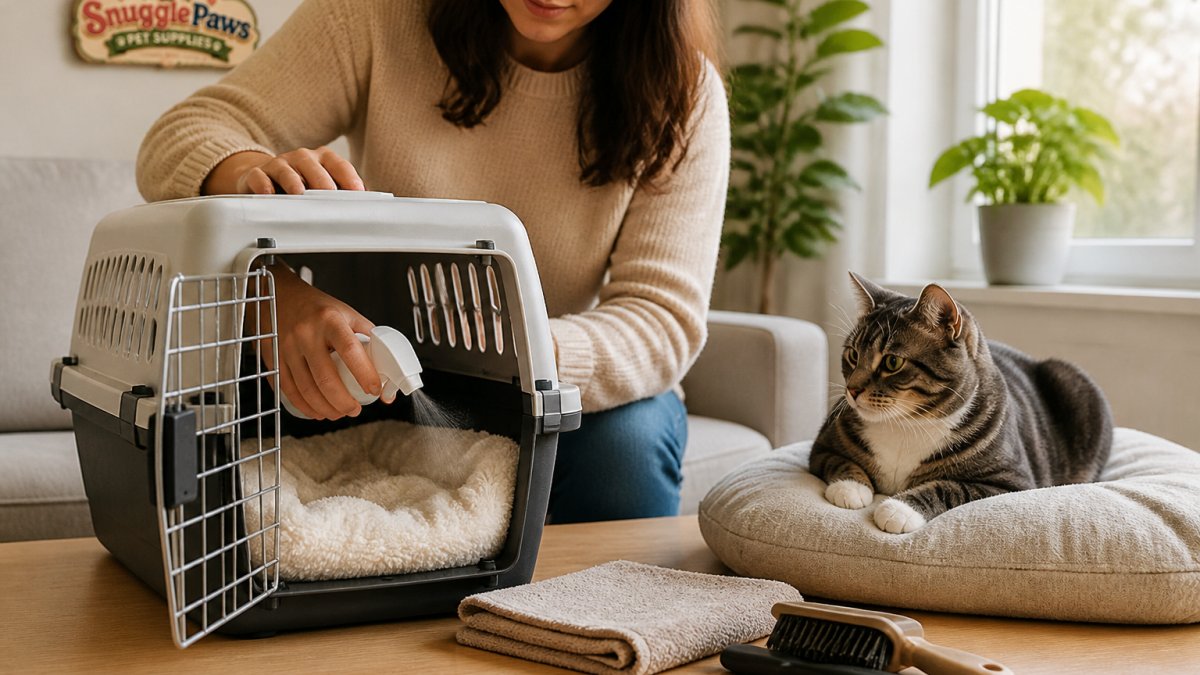
Where to Spray, Surface by Surface
The single biggest variable in whether a spray helps is where you put it. Aim for porous, absorbent materials the cat will contact with its face or body, and avoid anything the cat associates with elimination or food.
- Carriers and crates. Spray the interior walls and the pad or towel inside, not the door latch or handle. Let it dry fully before the cat goes in.
- Beds and blankets. A light mist on the underside or the outer rim keeps the scent near the cat without soaking the sleeping surface.
- Scratching posts and cat trees. Spray the sisal or carpeted areas at mid-height, where a cat rubs its cheeks when it stretches.
Skip the litter box, food bowls, water fountains, and anything the cat chews. Those areas should stay neutral or clean-smelling.
How Much to Use and How Long to Wait
A common pattern is two to three short bursts per surface from about 6 to 8 inches away. That is enough to leave a faint scent layer without wetting the fabric. If the surface looks damp, you have over-applied; blot it with a clean cloth and let it air out longer.
Wait 15 to 30 minutes before the cat goes near the treated area. Most alcohol-based sprays need that window to flash off, and a wet surface can startle a cat or pick up litter dust. In humid weather, give it closer to 30 minutes.
How Often to Reapply
Reapply once a day during a stressful period, such as the week before a move or the first few days after a new pet arrives. For a one-time event like a vet visit, a single application a few hours before departure is usually enough. There is no benefit to spraying multiple times a day; the signal does not stack, and repeated wetting just wastes product and irritates sensitive noses.
A Realistic Two-to-Four-Week Test
Treat the first two to four weeks as a trial, not a verdict. Track three or four concrete behaviors so you are judging the spray on evidence rather than a feeling:
- Hiding. Note how many hours a day the cat spends in hiding spots.
- Appetite. Record whether meals are finished or left half-eaten.
- Scratching. Count new scratch marks on furniture or posts.
A simple notebook or phone note is enough. If none of those measures move after a month of consistent use alongside environmental changes, the spray is probably not the right tool for this cat, and it is time to talk to your vet about other options.
Common Application Mistakes to Avoid
Watch Out
Never spray directly on the cat. It startles the animal, wastes product, and can irritate eyes and airways. Spray surfaces only, and keep the cat out of the room while you apply.
Other frequent slips:
- Spraying too close, which soaks fabric and leaves a strong alcohol smell
- Applying near the litter box, which can confuse the cat about where to eliminate
- Expecting instant results on day one
Key Takeaway
The spray is a setup tool, not a rescue tool. Treat the surface before the stressor, give it time to dry, and judge the result over weeks, not minutes.
Pheromone Spray vs. Diffuser for Cats: Which Fits Your Situation
The choice between pheromone spray and diffuser comes down to space and timing. A spray is best for targeted, short-term use. A diffuser is best for continuous coverage of a whole room. The useful question is not which product is better but which stressor you are trying to address.
| Feature | Pheromone Spray | Pheromone Diffuser |
|---|---|---|
| Coverage | Small, targeted spots | Whole room |
| Best for | Carriers, travel, new items | Ongoing home stress |
| Setup | Instant, no plug needed | Plug-in, needs refills |
| Duration | Reapply daily | Continuous while plugged in |
| Cost pattern | Lower upfront | Higher ongoing |
Pick the Spray When the Stressor Is Short and Specific
Reach for a spray when the anxiety is tied to a place or event the cat will encounter briefly:
Pet Anxiety Warm Vest Jacket →
- Travel and vet visits. Treat the carrier interior a few hours before departure.
- A new bed, tree, or scratching post. Spray the new object so it smells familiar before the cat investigates.
- A single room introduction. When you are introducing a new cat through a door, a light mist on the door frame at cat height can take the edge off the first nose-to-nose moment.
Sprays are also the better choice in a home where you cannot leave a plug-in running, such as a rental with limited outlets or a room the cat only visits occasionally.
Pick the Diffuser When the Stressor Is Ongoing and Room-Wide
A diffuser earns its keep when the tension is continuous and spread across a space:
- Multi-cat households with steady friction. A diffuser in the main shared room covers the whole area where cats cross paths.
- A recent move. Plug one in where the cat spends most of its time for the first few weeks.
- A new baby or a long-term houseguest. Continuous coverage beats daily spraying when the stressor lasts weeks.
Diffusers need a little planning: place them in an open area, not behind furniture or under a shelf, and keep them away from drafts from windows or HVAC vents. Replace the refill on the maker's schedule rather than waiting for the scent to fade, since owners adapt to the smell faster than cats do.
Many Households Use Both
The two formats are not competitors. A common pattern is a diffuser running in the main living area for baseline coverage, plus a spray reserved for the carrier, the vet bag, and any new object entering the home. That split keeps the ongoing cost of refills focused on the room that matters most while the spray handles the portable, event-driven stress.
Pro Tip
If you are unsure, start with the spray. It is cheaper to test, it does not commit you to a refill subscription, and it tells you quickly whether your cat responds to the scent signal at all before you invest in room-wide coverage.
When Neither Format Is the Right Answer
Pheromones are a support tool, not a treatment. If a cat is showing sudden hiding, appetite loss, marking outside the box, or new aggression, the first stop is a veterinary exam, not a product page. Pain, dental disease, thyroid problems, and urinary issues can all look like anxiety, and no spray or diffuser will fix them.
For readers weighing other options, a comparison of pheromone diffusers vs calming supplements for dogs shows how delivery methods change the trade-offs.
Key Takeaway
Spray for events and objects; diffuser for rooms and weeks. Use both if the household has a steady baseline stressor plus occasional travel or new items, and see a vet first if the behavior is sudden or severe.
Cat Pheromone Spray Side Effects and Safety
Cat pheromone spray side effects are rare. Most products are alcohol-based and low-risk when used as directed. The main concerns are scent sensitivity and spray drift.
Keep these points in mind:
- Ventilate the room. Open a window while spraying.
- Avoid the cat's face. Never spray near eyes or nose.
- Test first. Try a small area if your cat is sensitive to smells.
Pheromone sprays are not a treatment for medical conditions. They support behavior, not illness. If a cat shows sudden changes, a vet visit comes first.
Signs of Stress in Cats and When to Call Your Vet
Common stress signals in cats include hiding, over-grooming, loss of appetite, urine marking, and increased scratching. Inter-cat conflict and aggression are also behavioral signs worth noting.
Some situations raise stress fast: a move, a new pet, a baby, or a stay in a new environment. Pheromone therapy can help ease these transitions.
Call your vet if you notice:
- Sudden hiding or withdrawal
- Not eating for more than a day
- Spraying or marking outside the box
These signs can point to pain or illness. Behavioral intervention works best alongside veterinary advice.
Building a Calming Setup for Your Cat
A calming setup pairs scent signals with physical comfort. Pheromones work better when the cat has safe places to retreat to. Start with a quiet corner and build outward.
Try these additions:
- A calming donut bed for a secure resting spot
- A soft anxiety vest as a non-spray option for stressful moments
- Interactive toys that redirect nervous energy, covered in this guide to the best interactive toys for anxious kittens
Small, steady changes beat big overhauls. A cat that feels in control of its space calms faster.


Frequently Asked Questions
How long does cat pheromone spray take to work?
Some owners notice a calmer cat within 15 to 30 minutes of spraying a carrier, blanket, or scratching post, because the alcohol carrier evaporates quickly and the pheromone is left on the surface. For ongoing stress patterns like urine marking or inter-cat conflict, give it two to four weeks of consistent use before judging results. Individual response varies, and a cat with severe anxiety may need a behavioral plan alongside the spray.
Does cat pheromone spray work for every anxious cat?
No. Pheromone spray effectiveness depends on the cause of the anxiety and the individual cat. Sprays tend to help most with situational stress such as travel, vet visits, or a new room, and less with deep-seated fear or aggression between cats. If you see no change after a few weeks of correct use, the trigger may need a different approach, including environmental changes and a veterinary assessment.
Can pheromone spray cause side effects in cats?
Reported cat pheromone spray side effects are usually mild and short-lived, such as sneezing or nose wrinkling right after application, mostly from the alcohol carrier. Never spray directly on a cat, and let treated surfaces dry before the cat returns. Some cats show no reaction at all, and a few appear mildly agitated by the scent. Stop use and talk to your vet if your cat seems worse.
When should I ask a veterinarian about my cat's anxiety?
Ask for help if your cat stops eating, hides for most of the day, over-grooms to the point of bare patches, or shows sudden aggression. These behavioral signs can point to pain or a medical issue rather than stress alone. A vet can rule out underlying conditions and discuss whether pheromone therapy should be combined with behavior modification or medication.
Anxious cats need more than one tool. SnugglePawsPetSupplies offers calming beds, cozy vests, and engaging toys that work alongside pheromone sprays to help cats feel at home. Fast shipping, a quality promise on premium products, and easy returns make building that calming setup simpler. Get started with SnugglePawsPetSupplies and give your cat a calmer, more comfortable space.

