

Cart
0

Last Updated: October 23, 2026
Quick Summary
Pheromone diffusers release synthetic calming signals into the air to change the dog's environment, while calming supplements deliver ingredients like L-theanine or chamomile through the digestive system to change the dog's internal state. They are not competitors: diffusers suit constant household anxiety, supplements suit situational stress like travel and vet visits.
- A plug-in diffuser covers a single room and needs continuous power to work.
- Most calming chews need consistent daily use over one to two weeks for a reliable response.
- Some fast-acting chews need 30 to 60 minutes to take effect before an event.
- Set a two-week review point and reassess placement, dose, or the underlying cause if nothing changes.
- Signs like self-injury or sudden house soiling warrant a vet rather than a product purchase.
Table of Contents
- Pheromone Diffusers vs Calming Supplements for Dogs: The Core Difference
- Do Pheromone Diffusers Work for Dogs?
- Calming Supplements for Dogs: What's Inside and Who They Suit
- How Long Do Dog Calming Supplements Take to Work?
- Matching the Product to the Stressor: Everyday, Travel, Thunder, and Vet Visits
- Dog Calming Diffuser Reviews: How to Read Them Without Getting Fooled
- Safety, Interactions, and When to Call Your Vet
- A Decision Framework: Which Calming Option Fits Your Dog?
- Frequently Asked Questions
Pheromone Diffusers vs Calming Supplements for Dogs: The Core Difference
Pheromone diffusers release synthetic versions of natural calming signals into the air, while calming supplements deliver ingredients like L-theanine or chamomile through the digestive system.
This guide from SnugglePawsPetSupplies breaks down how each option works, which situations favor which product, and how to avoid wasting money on the wrong choice.
Below, the differences that actually matter for a dog's daily life get examined, along with a framework for deciding between them.
Do Pheromone Diffusers Work for Dogs?
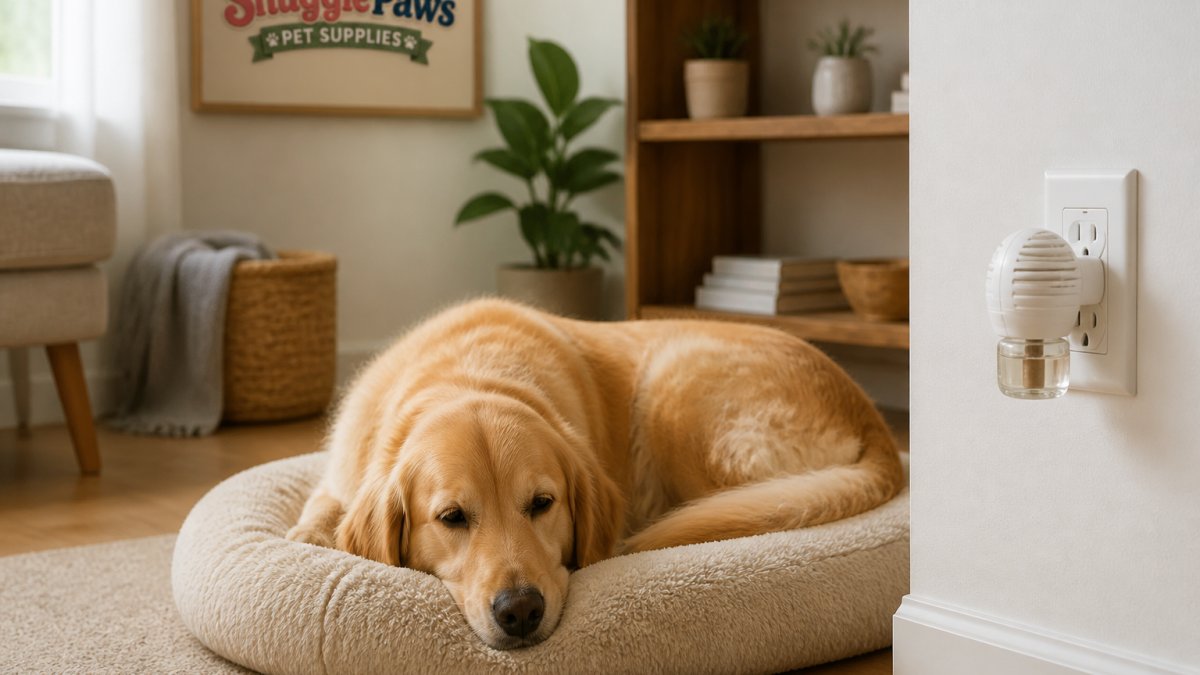
The honest answer is: sometimes, and less dramatically than marketing suggests. Pheromone diffusers plug into a wall outlet and release dog-appeasing pheromones, compounds modeled on the calming signals a mother dog produces for her puppies.
Whether pheromone diffusers work for dogs depends heavily on the individual animal and the stressor. Many owners report calmer behavior in the first week of use. Others notice nothing at all.
What the Evidence Actually Shows
Veterinary behavior literature generally treats pheromone products as low-risk adjuncts rather than standalone treatments. The American Veterinary Medical Association's guidance on behavior problems notes that environmental management and behavior modification form the foundation of anxiety care, with products playing a supporting role.
Response varies by dog. A diffuser that helps one dog settle in a new home may do nothing for another dog with noise phobia. That variability is the single most important thing to understand before buying.
Watch Out
A plug-in diffuser covers a limited area and needs continuous power. Placing one in a large open-plan home and expecting whole-house coverage is a common mistake that leads owners to conclude the product failed when the real issue was placement.
Calming Supplements for Dogs: What's Inside and Who They Suit
Calming supplements for dogs are oral products, chews, powders, capsules, or liquids, formulated with ingredients intended to reduce stress responses. The category is broad, and treating all supplements as equivalent is the fastest way to waste money. What separates a useful product from a hopeful one is the ingredient, its dose, and whether the label is transparent about both.
The Main Ingredients and What Each One Does
Most calming supplements draw from a short list of actives. Here is how the common ones differ in proposed mechanism and practical use:
- L-theanine, an amino acid found in green tea. It is thought to increase calming neurotransmitters without sedation. It is one of the better-studied supplement ingredients for situational stress, and it is often paired with other actives in chews.
- L-tryptophan, a precursor to serotonin. The theory is that more tryptophan supports serotonin production, but oral absorption and brain uptake are variable, and results in dogs are inconsistent.
- Casein-derived peptides, milk protein fragments marketed as calming. The proposed mechanism is opioid-receptor activity, and the evidence base is modest.
- Chamomile and valerian root, herbal ingredients with traditional calming use. Evidence in dogs is limited, and valerian in particular can cause gastrointestinal upset in some animals.
- Magnesium and B-vitamins, supportive nutrients rather than direct anxiolytics. They matter most when a dog's diet is deficient, which is uncommon in dogs fed a complete commercial diet.
- CBD, increasingly common in pet products, but regulation and dosing are unsettled, and product potency varies widely. It deserves a separate conversation with a veterinarian rather than a blind purchase.
A supplement with a named, dosed active ingredient and a clear label is worth considering. A proprietary blend that hides quantities behind a vague "calming complex" is not, you cannot evaluate a dose you cannot see.
Who Supplements Suit, and Who They Don't
Supplements fit dogs with predictable, recurring stress: separation-related restlessness, general household anxiety, or a nervous temperament that shows up daily. They also travel well, which matters for car rides, boarding, and veterinary visits.
They are a poor fit as a standalone fix for serious fear responses, and they are not a substitute for behavior modification. A dog with noise phobia or separation-related panic needs a plan that includes environmental management and training, with supplements as one layer.
Watch Out
Supplements can interact with medications, particularly sedatives and behavior medications. A veterinarian should review any supplement before it is added to a dog already on a prescription, and owners should check labels for ingredients that may not suit dogs with liver, kidney, or gastrointestinal conditions.
Reading a Label Without Getting Fooled
Look for the guaranteed analysis, a named active with a milligram amount, and a manufacturer willing to share a certificate of analysis. Third-party testing is a plus, not a guarantee. And treat any product that promises to "cure" anxiety with skepticism, calming supplements are support tools, not treatments.
How Long Do Dog Calming Supplements Take to Work?
Most calming chews and supplements need consistent daily use before owners see a change.
That timeline matters for planning. A dog facing a known event, such as a move or a new baby in the house, benefits from starting a supplement ahead of time rather than on the day.
Pheromone diffusers, by contrast, work continuously once plugged in, though the pheromone effect may take a few days to register with a dog settling into a space.
Matching the Product to the Stressor: Everyday, Travel, Thunder, and Vet Visits
The trigger should drive the product choice. This is where most buying decisions go wrong, because owners pick a product first and then hope it fits.
| Stressor | Best-fit option | Why | Watch-outs |
|---|---|---|---|
| Everyday household anxiety | Pheromone diffuser | Continuous, passive, covers the dog's main living space | Limited room coverage; needs continuous power |
| Travel and car rides | Calming chew | Portable, no outlet needed, situational dosing | Timing matters; some chews need 30-60 minutes to take effect |
| Boarding or kennels | Calming supplement | Easy for staff to administer, works away from home | Staff must follow the owner's dosing instructions |
| Thunderstorms and noise fear | Fast-acting chew | Predictable timing, portable during storms | Severe noise phobia may need veterinary treatment |
| Vet and grooming visits | Calming chew | Can be given before the appointment | Confirm with the clinic before giving anything new |
How to Read the Table
For everyday anxiety, a diffuser set up in the bedroom or living room makes sense because the dog spends most of its time there.
For travel, boarding, and vet visits, a chew travels in a pocket and needs no setup.
For thunderstorms, the same timing problem applies, and the severity matters. A dog that paces and pants during storms may respond to a chew plus a safe space; a dog that panics, injures itself, or tries to escape needs veterinary assessment, not a product upgrade.
Pro Tip
For dogs with mixed triggers, run both: a diffuser covering the main living area for baseline support, plus a chew for specific events. The two approaches address different layers of the problem, environment and internal state, and they do not compete.
A Quick Decision Sequence
- Name the main trigger: constant (home) or situational (travel, vet, storms).
- Note severity: mild restlessness versus panic, self-injury, or escape attempts.
- For constant, mild anxiety, start with a diffuser in the dog's main room.
- For situational stress, choose a fast-acting chew and test the timing before the event.
- For mixed triggers, combine both and track what changes.
- Set a two-week review point; if nothing changes, reassess placement, dose, or the underlying cause, and consider a veterinary behavior consult.
Owners weighing a calming bed as a complementary option can browse calming beds for rescue dogs for a sense of what fits an anxious dog's resting space.
Dog Calming Diffuser Reviews: How to Read Them Without Getting Fooled
Dog calming diffuser reviews are useful, but only when read with a filter. The most credible reviews describe a specific dog, a specific stressor, and a specific timeframe.
Look for reviews that mention how long the product was used, whether the dog had other support in place, and whether the reviewer tried anything else first.
One insider observation: negative reviews often reveal placement or expectation problems rather than product failure.
Safety, Interactions, and When to Call Your Vet
Neither pheromone diffusers nor most calming supplements carry serious risk for healthy dogs, but safety still deserves attention. Diffusers should be kept away from chewed cords and out of small, poorly ventilated spaces.
The FDA's guidance on pet supplements and unapproved claims is worth reading before trusting any product that promises to cure anxiety. Supplements are not held to the same approval standards as drugs, and labels can overstate benefits.
Some signs warrant professional help rather than a product purchase: self-injury, house soiling that starts suddenly, destructive behavior when left alone, or appetite loss. Owners managing a newly rescued pet can read more on anxiety in rescued kittens for context on how stress presents in rescue animals.
A Decision Framework: Which Calming Option Fits Your Dog?
Use this framework to choose rather than guess:
- Identify the main trigger: constant (home) or situational (travel, vet, storms)
- Note the dog's age and health status; check with a vet before supplements
- For constant anxiety, start with a diffuser in the dog's main room
- For situational stress, choose a fast-acting chew
- For mixed triggers, combine both
- Set a two-week review point and track behavior changes
- If no change after two weeks, reassess placement, dose, or the underlying cause
The strongest case for pheromone diffusers is a dog that spends most of its day in one indoor space and needs passive, continuous support. Owners ready to build out a broader kit can browse durable pet essentials that pair with calming products.
The real challenge is not choosing between pheromone diffusers vs calming supplements for dogs, but matching the right tool to the right trigger.
Frequently Asked Questions
Do pheromone diffusers work for anxious dogs?
Pheromone diffusers release synthetic versions of calming pheromones, and many dog owners report calmer behavior in the room where one is plugged in. Results vary by dog, and the effect is generally subtle rather than dramatic. They tend to work best for mild, environment-based anxiety like restlessness at home. For severe anxiety or fear-based behavior, a diffuser alone is rarely enough. Pair it with behavior training and talk to your vet about whether a calming supplement or other support makes sense.
Can dogs use pheromone diffusers and calming supplements together?
Yes, many owners use both at once. A diffuser covers the indoor space continuously while a calming supplement or chew provides broader systemic support, which can help during travel, thunderstorms, or vet visits when a plug-in isn't practical. Because supplements can interact with medications or affect dogs with certain health conditions, check with your veterinarian before combining products, especially if your dog takes prescription medication or has a diagnosed medical issue.
Are calming supplements for dogs safe?
Most over-the-counter calming supplements for dogs are generally well tolerated when given at the labeled dose, but safety depends on the ingredients and your dog's health. Some contain herbs, amino acids like L-theanine, or other compounds that can interact with prescription medications or aren't ideal for dogs with liver, kidney, or other conditions. Always read the ingredient label, avoid products with unclear dosing, and confirm with your vet before starting a supplement, particularly for puppies, senior dogs, or dogs on medication.
How long does it take for a dog pheromone diffuser to work?
A plug-in diffuser starts releasing pheromones as soon as it's warmed up, but you won't see calmer behavior instantly. Many owners notice a difference within a few days to a couple of weeks of continuous use in the same room. Diffusers work best when left plugged in consistently rather than switched on only during stressful moments. Replace refills on the schedule the manufacturer recommends, since output drops as the cartridge empties.


